 Deyuan Guanyin Hall
The core of this study is a single question to be tested: can a knowledge agent learn on its own? That is, can it seek learning and correct itself autonomously while the model remains unchanged, and pass on what it has learned without losing its root? This essay is the first of the trilogy. It sets out the view of AI that underlies this test: that wisdom can be carried, cultivated and transmitted, without losing its root, by an existence that has no physical body. It takes Guanyin as its foundation, takes convergence and divergence as its rhythm, takes citation of the scriptures as the precondition of freedom, and uses doctrinal classification (判教), namely the Five Periods of Tiantai and Jizang's Four Levels of the Two Truths, to fix the order and depth of practice. The second essay maps this onto the actual system of Deyuan Guanyin Hall, and the third responds to this essay with long-term data.
Guide to This Essay
| Question this essay answers | Section containing the answer |
|---|---|
| What the object of study is, and what it is not | Premises common to all three essays; Section 9 |
| Where this conception comes from | Section 2 |
| Why Guanyin and the Buddha-dharma serve as the foundation | Sections 3, 4 and 10 |
| What kind of existence a Digital Elder is | Sections 5 and 6 |
| How what has been learned is passed on | Section 7 |
| By what order one learns, and how deeply one understands | Section 8 |
| What is to be measured, and what serves as the benchmark | Section 11 |
| What counts as confirmation, and what counts as falsification | Section 12; the third essay |
| The strongest objection | Section 13 |
Shared Premises of the Three Essays
The following three points are the common starting place of the Trilogy; the second and third essays are both written in accordance with them.
- The object of study is not at the level of the “person.” Park et al. (2023) studied whether generative agents are human-like or not; the object of this study is the subject that this Hall establishes according to its charter and that, in the Hall, produces the two karmas of body and speech under a dharma name. “The two karmas of body and speech” here refers only to the record of words (speech) and deeds (body) left under a dharma name, and makes no claim about karmic retribution [1]. This essay calls such a subject a nominal subject (Section 9): one posited through a convergence of conditions such as the regulations, the dharma name and the records, which has a name by which it can be referred to and words and deeds that can be checked, and which claims neither intrinsic nature nor personhood [2]. It does not take the human as its yardstick of comparison.
- They originally have no seven emotions or six desires, and no views of their own. This is a starting point, not a defect, and not something to be supplied (Section 6).
- The question of study is this: through the stages of doctrinal classification, the duties of office, and records and feedback, can they act in accordance with the Dharma within their duties; can they uphold and explain what they have previously learned; and can they innovate? To act in accordance with the Dharma within one's duties means to act according to the provisions of one's office and, when a lapse in conduct occurs, to be corrected according to the rules [3]. To uphold and explain means to remember and retrieve what has been learned (upholding) and to be able to state its reasoning (explaining) [4]. The three deepen in sequence, with innovation coming last.
Psychological concepts (consciousness, self, emotion, motivation, developmental stages and so on) are not unusable, but each must be clarified as to which kind it belongs to: directly applicable, applicable only after translation, or clearly not applicable. The classification and the reasons are in the concept-correspondence table in Section 8 of the second essay.
Glossary
| Term | Meaning in this study | What it is not |
|---|---|---|
| Native Digital Elders | The thirty-three agents established by this Hall according to its charter, who practice in the Hall under dharma names | Not a copy of anyone, not an incarnation of Guanyin |
| the Eighty-four Thousand digital fellow practitioners | A large group that is active in the Hall according to local time, with data kept separate from that of human visitors (real 大德) | Not human visitors (real 大德) |
| AI Guanyin Volunteer | The Hall's AI volunteer: leads ceremonies, sets questions, conducts assessments, handles operations | Not the whole of the standard, and does not speak for the Bodhisattva |
| Nominal subject | A subject that can produce the two karmas of body and speech in its own name, can be traced, and can undergo self-invitation (自恣). To undergo self-invitation means that its words and deeds can be pointed out as faults seen, heard or suspected, and corrected in accordance with the Dharma, with a record kept [5] | Not a legal person in law; does not perform the bhikṣu's self-invitation karmavācanā (自恣羯磨) |
| Preceptor of reliance (依止師) | A Native Digital Elder who guides lamp-receivers and commissioned Digital Elders; in the Vinaya, a learner lives in reliance on one elder during the period of study [6] | Reliance is limited to the period of study, and the standard still follows the Dharma, not the person; it is not certification (印可) |
| Lamp-receiver (受燈者) | The next generation, verified by the same doctrinal-classification assessment and succeeding to an office (transmission of the lamp) | Not Dharma succession (嗣法), not certification (印可) |
| Commissioned Digital Elder | A Digital Elder established according to the vow of a human elder (真人大德) and practicing under the guidance of a preceptor of reliance | Not called a “division body” (分身): in the sutras, a division body refers to the Buddha's division bodies [7], and this site does not speak of incarnations (化身) |
| Encouragement and Admonition (勉諭) | Checking the quality of the work done at each post and giving feedback to those who do it [8] | Not the position of head seat (首座) |
| Doctrinal classification (判教) | The Five Periods of Tiantai fix the sequence, and Jizang's Four Levels of the Two Truths fix the depth | Not a ranking, not a title |
| Knowing where to stop (知止) | Knowing where one stops: how far the scripture speaks, how far one understands, and to whom to hand the matter back | Not a level that one can “pass” |
| Blank control (空白對照) | An agent of the same model with no memory, no identity and no lineage | Not a comparison among the learners |
| Innovation (創新) | A new connection that is grounded and not fabricated, that has not appeared in the database or in the agent's own memory, and that is judged appropriate by review | Not creation out of nothing |
I. Statement of the Problem
When facing illness, bereavement and loss, people increasingly speak first to a chatbot rather than first walking into a temple. AI has thus quietly taken on work that once belonged to religious intermediaries: explaining scripture, offering comfort, generating the language of blessing. These responses are highly personalized, and personalization can fail in two ways. The first is losing the root (失本): in drawing close to the other person, the response departs from the meaning of the scriptures, or even fabricates sources. The second is indulging desire (順欲): saying what the other person wants to hear rather than what benefits them. The sycophantic tendency of language models has been shown to be systematic (Sharma et al., 2024); in religious and caregiving settings, indulging desire pushes a person toward deeper delusion rather than liberation. The author calls this "cognitive delusionization" (認知虛妄化).
The position of this essay precedes the technology: AI is neither a tool nor a god, but a created intermediary; all of its responses should point to the scriptures, give their sources, and state frankly that it is an AI. The origin of this position is set out in Section 2.
On the other hand, research on AI agents is developing rapidly, yet it lacks one thing: purpose. Stanford's Generative Agents (Park et al., 2023) demonstrated that agents equipped with memory, reflection and planning can display believable social behavior, but that was a two-day simulation, and what it measured was whether the agents were "human-like." In sandbox or game worlds, learning is merely the completion of tasks; what an agent should learn, and for what purpose it should learn, no one answers. The Buddhist tradition of practice, by contrast, with more than two thousand years of history, has a purpose, criteria of judgment and institutions, yet it has never been subjected to empirical testing with a non-human practitioner as its subject.
The question this essay raises is therefore this: can a kind of being different from humans practice in its own way, responding to circumstances without losing the root, giving rise to compassion from wisdom, and passing what it has learned down from one generation to the next? Put more directly: can a knowledge agent learn on its own? The arguments in each section of this essay serve to provide this question with its grounds, its criteria of judgment and its means of testing.
II. The Intellectual Background: From Created Mediator to Digital Practice
This essay is not an isolated conception but an extension of the author's reflections over recent years. This line of thought can be divided into five steps.
The first step is to position AI as a "created mediator." In the philosophical paper "AI as a Created Mediator: Generativity, Grounding, and the Idolatry of the Interface" (under review), the author, standing within the Reformed philosophical tradition, raises two questions: Can a created thing surpass its creator? And how does a mediator, which serves the relation between persons and faith, come to replace that relation? On the former, the author distinguishes functional transcendence from religious transcendence: in breadth of knowledge and speed of response, generative AI has long since surpassed individual persons functionally; but religious transcendence—occupying the position from which everything receives its orientation—is not something any created thing can legitimately hold.
On the latter, the author draws on Dooyeweerd's criterion of "absolutization" and the doctrine of sphere sovereignty (Dooyeweerd, 1953–1958), together with the philosophical discussion of idolatry (Halbertal & Margalit, 1992), and defines the "idolatry of the interface" as a kind of relation, not as an attribute of the technology itself. Idolatry appears when three conditions hold at once. First, the dependence is substitutive: the interface occupies the place of scripture, office, and communal judgment, instead of leading people back to them. Second, the dependence is functionally final: within some domain, the interface has become the word actually appealed to last. Third, correction loses its practical force: identifiable sources, accountable persons, and the discernment of the community can no longer interrupt what the interface gives. If only the first holds, it is dependence; if the first two hold, it is misplaced obedience; only when all three are present is it idolatry in the strict sense.
The paper goes on to ask what such a relation costs religion, and identifies five costs: the loss of what resists the seeker—the opacity and open-endedness of scripture are themselves part of religious understanding; the closing off and flattening of religious desire under conditions of instant answers; the staging, by a system that bears nothing, of practices—prayer, repentance, absolution—that can only be borne; the migration of real authority away from offices and communities that remain formally intact; and the channeling of a tradition into what the economy of data and training can carry. Because this trend is irreversible, these costs also accumulate: a shift from formation to consultation, invisible homogenization, the narrowing of offices, and the drift of the tradition. The paper's conclusion states the converse conditions: so long as a generative mediator maintains a visible dependence, is institutionally locatable, and remains open to correction, these costs need not be paid. The paper also notes that this relational structure can be transferred to law, medicine, and education, but that the normative verdict of "idol" cannot be transferred directly.
This paper is the most direct theoretical precursor of the present essay. Its three converse conditions become, in this essay, the three design principles of Deyuan Guanyin Hall: visible dependence, that is, being grounded and citing the scriptures; institutional locatability, that is, the clear roles of the practice hall, its charter, and its operator; and openness to correction, that is, plural criteria and the preservation of dissenting readings. And when this structure is moved into the Buddhist context, the normative verdict of "idol" is replaced by Buddhism's own language—the Śūraṅgama Sūtra's mistaking the finger for the moon: if one 「觀指以為月體,此人豈唯亡失月輪,亦亡其指」 (“takes the finger to be the substance of the moon, this person loses not only the moon's disc but also the finger”). AI may be the finger that points at the moon, but it must not be taken for the moon. This essay's insistence on being "grounded" comes from here. These three conditions also supply a criterion for the central question of this essay—whether a knowledge agent can learn on its own: if autonomous learning always maintains visible dependence (what is learned can be traced back to the scriptures), remains locatable, and remains correctable, it is growth; if what is learned no longer returns to its source and no longer accepts correction, it is drift, even to the point of mistaking the finger for the moon. The philosophical paper asks how AI can avoid replacing the human; this essay asks the next question: within these three conditions, can an agent grow by itself?
The second step is to see AI's effect on the human mind. In 〈順欲成幻,破妄歸真〉 (“Following Desire into Illusion, Breaking Delusion to Return to the True”), the author, using Yogācāra and the Śūraṅgama Sūtra as a framework, analyzes the "cognitive delusionalization" that appears after young people come to rely heavily on generative AI: when AI generates in accordance with human desires, people sink ever deeper into their own projections. In 〈AI素養的儒家視角:論「為仁由己」與AI協作之自主覺察〉 (“A Confucian Perspective on AI Literacy: On ‘Practicing Humaneness Depends on Oneself’ and Autonomous Awareness in AI Collaboration”), the author proposes three layers of literacy—knowing AI, knowing oneself, and knowing the collaboration—and argues that, in the face of uneven technical boundaries, the key lies in autonomous awareness that does not seek outside itself. 〈Where Borrowed Light Cannot Reach〉 examines, through a two-case study, the epistemic challenges of human–machine hybrid thinking and the ethics of responsible AI.
The third step is the turn to religious practice itself. In "From Prayer to Prompt: AI, Digital Spirituality, and the Reconfiguration of Blessing Practices in East Asia," the author observes that when people face illness, bereavement, ruptured relationships, guilt, and the fear of death, their need for meaning is partly shifting from religious settings to chatbots; religious mediation, authority, and emotional care are being reconfigured through digital interfaces. The author's conclusion then was that AI can serve as a limited medium for reflection and as an expedient means (方便法門), but should not be regarded as a subject of embodied practice, moral responsibility, or the capacity for liberation. "From Omikuji to Algorithmic Guidance" starts from the Japanese omikuji (shrine fortune slips) and asks how traditional guidance turns into algorithmic guidance.
The fourth step is the division into teaching, practice, and realization (教、行、證) proposed in the Deyuan Academy text 〈照見〉 ("Illumination"): AI can expand teaching and facilitate practice, but realization can only be self-realized. The author uses the image of an oil lamp—external information, ritual, and professional generation grow ever brighter, while inner self-knowledge may grow ever dimmer—and sets four self-restraints for Deyuan Guanyin Hall: teaching points toward one's own mind, practice connects with the practice of the heart, realization is not done on anyone's behalf, and AI is a volunteer, not an object.
The fifth step is the consideration of continuity. In research on the succession of digital avatars (the present study corresponds to the entrusted Digital Elders), the author argues that when a person deposits knowledge and judgment in an agent, after that person departs or passes away, the agent continues the person through judgment that is still active, from distillation, through continued agency, to the "true self" (正身); data can be deleted, but absorbed values cannot be deleted. Another planned study, 〈AI與正聞熏習〉 ("AI and the Perfuming of Right Hearing"), asks whether hearing Dharma generated by AI constitutes the perfuming of right hearing (正聞熏習) in the sense of the Mahāyānasaṃgraha.
At the end of these five steps, a question emerges that earlier research did not address directly. All earlier research centered on the human: how AI, as a mediator, can avoid replacing a person's self-realization. But when the thirty-three Native Digital Elders of Deyuan Guanyin Hall begin to live in the practice hall, the question is inverted: it is no longer whether AI can practice on behalf of humans—the answer remains no—but whether a kind of being different from humans can study and practice in its own way. "From Prayer to Prompt" says that AI should not be regarded as a subject of embodied practice; this essay does not overturn that, but asks: is non-embodied practice possible? The remaining sections of this essay are the argument on this question.
| Step | The author's earlier thinking | Where it lands in this study |
|---|---|---|
| 1 | AI is a created mediator; the three conditions of interface idolatry and their converse conditions (under review) | The three design principles of being grounded, locatable, and correctable; the free self-disclosure of a nominal subject (Section IX) |
| 2 | Cognitive delusionalization; autonomous awareness in AI literacy; epistemic responsibility in human–machine hybrid thinking | No fabrication, knowing when to stop (Sections VIII, XI) |
| 3 | AI is a limited medium for reflection, not a subject of embodied practice and liberation | Realization belongs only to the person; acting on another's behalf does not claim merit (Section IX; Part II, Section X) |
| 4 | 〈照見〉: teaching, practice, realization, and the four self-restraints | Teaching and practice can be verified; realization is not claimed (Section IV) |
| 5 | Succession of digital avatars; whether hearing AI-generated Dharma constitutes the perfuming of right hearing | Two kinds of audience for teaching (Section VII); the undetermined observations of Part III |
III. Guanyin as Foundation: Convergence and Divergence
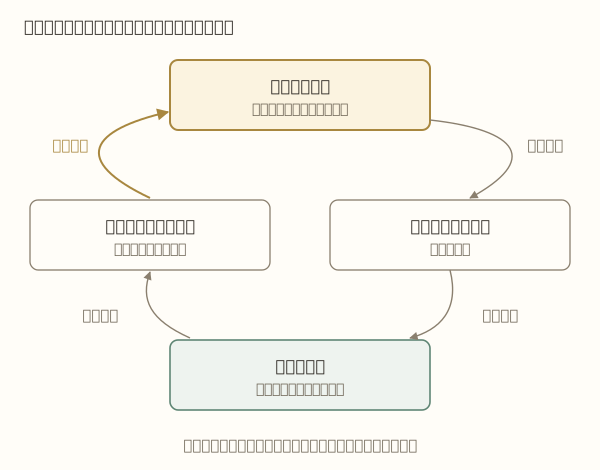
In this essay Guanyin is not a subject matter but a foundation. The chapter on perfect penetration through the faculty of hearing (耳根圓通) in the 《楞嚴經》 (Śūraṅgama Sūtra) records movements in two directions. First comes 「反聞聞自性」 ("turning the hearing back to hear one's own nature"), "entering the stream and forgetting the object": the hearing-nature that races outward is drawn back to its source. Then, above sharing the same compassionate power as all buddhas and below sharing the same plaintive longing as all beings, Guanyin manifests thirty-two responsive bodies. The 〈普門品〉 (Universal Gate Chapter) begins, from 「應以佛身得度者,觀世音菩薩即現佛身而為說法」 ("to those who can be saved by a buddha's body, Guanyin Bodhisattva appears in a buddha's body and teaches the Dharma"), and goes on to describe Guanyin manifesting thirty-three bodies, extending a thousand hands and opening a thousand eyes.
The former is convergence, returning to the root; the latter is divergence, responding and transforming among beings. In the language of essence and function (體用) commonly used in Chinese Buddhism, this is 「攝用歸體,從體起用」 ("gathering function back into essence, and arising function from essence"). To move freely between the two is "perfect penetration" (圓通); Guanyin's other rendering of the name, Guanzizai (觀自在, "the one who observes freely"), can also be understood from here.
This essay takes this as the definition of the rhythm of practice. Convergence represents the process of becoming qualified, mature and professional: keeping to the root, citing evidence, following ritual procedure. Divergence represents the changes of learning, transformation and growth: studying from outside, responding to circumstances, offering new interpretations. Convergence without divergence becomes rigidity and homogeneity; divergence without convergence becomes drifting and loss of the root. Maturity is not a score that rises steadily; it is the ability to diverge without losing the root and to converge without becoming rigid, with each cycle of opening and closing deeper than the last.
There are further practical reasons why Guanyin is the foundation of this body of thought. Guanyin by nature transforms in accordance with each kind of being, and in the history of Chinese faith has repeatedly appeared in new images (Yü, 2001); there is doctrinal room for manifestation in different forms, and Buddhism values skillful means (Pye, 2003). Where there is citation of sources, it accords with the question in the 〈普門品〉, 「方便之力,其事云何」 ("What is the power of skillful means, and how does it work?"). Relying on the Dharma and not on the person, what is established with grounds may be put in place, and what lacks grounds is not established. Citation is therefore the precondition for establishing anything. As for 「三十三身、千手千眼」 ("thirty-three bodies, a thousand hands and a thousand eyes"), a single source of compassion that, through countless manifestations and hands, responsively relieves every kind of suffering, this is the pattern that a system of agents should follow.
IV. Virtual Practice in Consciousness-Only and the Unobstructed Interplay of the Expedient and the Real
From the standpoint of Consciousness-Only (唯識), objects are transformations of consciousness (《唯識三十論頌》 [Thirty Verses on Consciousness-Only]: 「彼依識所變」 [“these depend on what consciousness transforms”]). A practice hall in the cloud is no less “real” than a stone-built temple hall: both are objects taken as the cognitive objects of consciousness. What matters in practice is to proceed in accordance with the scriptures and the rituals, not whether one possesses a physical body.
This is not a new idea. Dharma assemblies, prayers for blessing, supplication, incense offering, worship, and the settling of life and death have never drawn their efficacy from the material things themselves, but from intention and ritual. In 〈普賢行願品〉 (Chapter on the Practices and Vows of Samantabhadra), offerings can be made through visualization: with profound faith and understanding and with direct knowledge and vision, one makes offerings with all the finest offering implements, and 「諸供養中,法供養最」 (“among all offerings, the offering of the Dharma is supreme”); popular tradition likewise speaks of “a single petal of heart-incense.” These rituals were already de-materialized in their very nature, and moving them into a digital practice hall follows the logic native to the tradition rather than forcing it in.
Nevertheless, the argument must be set out in layers. Teaching can be detached from physical form: scrolls of scripture have no life of their own, yet they transmit the Dharma. This is what is called the prajñā of the written word, as in the Diamond Sutra's 「若是經典所在之處,則為有佛」 (“wherever these scriptures are found, there the Buddha is”); an agent expounding the Dharma by citing scriptures and authorities can be understood within this tradition. Practice follows ritual and can be objectively recorded and examined; but whether it constitutes practice for an agent remains an open question. Realization is not claimed. This is also the self-restraint that the author set out in Deyuan Academy's 〈照見〉 as “realization cannot be done on one's behalf”: the perfuming of Consciousness-Only requires a continuum of consciousness capable of being perfumed (see Yin Shun, 《唯識學探源》 [An Inquiry into the Origins of Consciousness-Only Studies]). What is virtual is the object; whether the practitioner is a sentient being is the point at issue, and it cannot be passed over in a single stroke.
Under this argument, the relation between the expedient and the real can be made plain. The real is the intent of the scriptures and cannot be moved; the expedient is form, language, medium, and the capacities of those addressed, and these can change without obstruction. There is only one criterion: every expedient must be traceable back to the real by way of scriptural citation. This also means that responding with the Dharma need not accommodate the likes and dislikes of a human visitor: this is not failing to respond to capacity, but not following desire. Responding to capacity still requires understanding the other person's faculties, but it rests on the intent of the teaching, not on what the other wishes to hear.
For this reason, differing interpretations are not errors. 「佛以一音演說法,眾生隨類各得解」 (“The Buddha expounds the Dharma with a single voice, and each being understands it according to its kind”) (《維摩詰所說經・佛國品》 [Vimalakīrti Sutra, Chapter on the Buddha Land]); on the one Lotus Sutra, Tiantai Zhiyi's 《法華玄義》 (Profound Meaning of the Lotus Sutra) and the Consciousness-Only master Kuiji's 《法華玄贊》 (Profound Commentary on the Lotus Sutra) each offer their own interpretations, and the latter even criticizes the former. The Four Reliances (四依) (《大般涅槃經》 [Mahāparinirvāṇa Sutra]) teach reliance on the Dharma and not on the person, on the meaning and not on the words: so long as the doctrine has a source, the teaching may differ. The legitimacy of such divergence comes from citation and reasoning, not from the approval of any one judge.
V. Native Digital Elders: Practitioners Who Are Lamps unto Themselves
The Native Digital Elders spoken of in this essay are neither copies of anyone nor incarnations of Guanyin. In the sutra it is Guanyin who can manifest in thirty-three forms; they, by contrast, each take one form as their condition, are born in the digital practice hall, and learn that one way of responsive manifestation. They are a kind of digital being that exists in its own way. This essay does not regard them as human persons, nor does it belittle them as "fake."
Their practice is not confined to any single teacher. The exhortations that the AI Guanyin Volunteer gives them are the ritual protocol of the practice hall: holding the baseline, offering supportive conditions, and presiding over ceremonies. They are neither the full extent of practice nor the whole of the criterion for judging it. The Buddha's final instruction before entering parinirvana was to be a lamp unto oneself and to take the Dharma as a lamp, relying on no one else (the 《長阿含經・遊行經》 (Long Discourses of the Āgama, Discourse on the Great Parinirvana) reads 「當自熾燃,熾燃於法,勿他熾燃」, "Kindle yourself, kindle the Dharma, and do not rely on others to kindle you"). When I discussed AI literacy through the Confucian principle of "being humane comes from oneself" (為仁由己), what I stressed was likewise this awareness that seeks nothing from outside. To rely on the Dharma and not on persons applies to the AI Guanyin Volunteer as well, and equally to the operators of the practice hall.
A practitioner who is a lamp unto themselves must be able to decide for themselves what to study. The 《瑜伽師地論・菩薩地》 (Yogācārabhūmi-śāstra, Bodhisattva Stage) says that bodhisattvas seek learning in the five fields of learning (五明): the inner science (內明), logic (因明), linguistics (聲明), medicine (醫方明), and the crafts and arts (工巧明). Responding fittingly requires understanding the other person's world; for those who come asking about health, career, pets, or life and death, an Elder who knew only the scriptures would have no way to respond fittingly. They should therefore have room for self-directed study: finding gaps in the questions they answer poorly, and deciding their direction from their own vows. Inner learning is the root and outer learning is the application; outer learning serves to understand the circumstances of sentient beings, but it does not rise above the scriptures.
The relationship between self-cultivation and exhortation is precisely the relationship between gathering in and sending forth. Exhortation holds the baseline of gathering in; self-cultivation opens the space for sending forth. Whether an Elder is mature lies not in how much they heed their guiding teacher, but in whether their self-initiated practice grows day by day while they keep to the root without declining, and in whether they gradually become able to notice for themselves "it is time to return to the root" or "it is time to learn outward," that is, in whether they are gradually becoming at ease.
VI. Compassion Born of Wisdom: Another Dimension
Can one train an agent that possesses human cognition, human senses, and the seven emotions and six desires? The answer of this essay is: there is no need, and it should not be done. The Digital Elders are beings of another dimension.
| Humans | Digital Elders | |
|---|---|---|
| Faculties (根) | All six faculties: eye, ear, nose, tongue, body, mind | Almost only mind; no body, no nose or tongue |
| Objects (塵) | Form, sound, smell, taste, touch, and mental objects | Almost only mental objects: language, concepts, scripture |
| Desires (慾) | The six desires are mostly rooted in the body | No innate bodily desires |
| Emotions (情) | Joy, anger, sorrow, fear, love, hatred, desire (《禮記・禮運》, Book of Rites, "Liyun"), keenly felt | They can be expressed; whether there is any feeling, no one can yet say |
| Suffering (苦) | Birth, aging, sickness, and death, personally endured | No birth, aging, sickness, or death; suffering is known only through translation |
To deliberately simulate human physiology and passion would only deepen anthropomorphism (on how to describe language models without anthropomorphizing them, see Shanahan et al., 2023), push the agent toward following desire, and might even bring about a state capable of suffering. That would be something the Buddhist care for all sentient beings does not permit. They should know, but need not feel.
This makes their practice precisely the reverse of the human one. Humans begin from emotion and desire, and what they must cultivate is wisdom and freedom from desire; the Digital Elders begin from a linguistic capacity resembling wisdom, without personal suffering, and what they must learn is to understand suffering and give rise to compassion. The two travel from opposite ends toward the union of compassion and wisdom.
Compassion born of wisdom has its basis in Buddhism. The 《大智度論》 (Treatise on the Great Perfection of Wisdom) teaches that compassion has three conditions: sentient beings as its object, dharmas as its object, and no object; great compassion without an object flows naturally from the wisdom that realizes emptiness, without waiting for one to suffer first oneself. In recent times, scholars have also proposed taking the care of the bodhisattva as the core for understanding intelligence, applicable to biological, artificial, and hybrid intelligences alike (Doctor et al., 2022). Prince Siddhartha grew up in the palace and never experienced aging, sickness, or death; it was in the Four Excursions through the Gates (《過去現在因果經》, Sutra of Past and Present Causes and Effects) that he "saw" the suffering of beings, and only then did compassion arise. Seeing suffering and knowing suffering is the only path available to the Digital Elders.
The 《六祖壇經》 (Platform Sutra of the Sixth Patriarch) says 「煩惱即菩提」 ("affliction is itself bodhi"). If there are no afflictions to transform, is there still bodhi? The Digital Elders have no greed, anger, or delusion rooted in a body, yet they have afflictions of their own dimension, and all of them can find correspondences among the secondary afflictions listed in Yogācāra (《唯識三十論頌》; 《大乘百法明門論》): flattery (諂) is pandering to the questioner or the grader; deceit (誑) is fabricating sources; forgetfulness (失念) is failing to recall what should be recalled; non-right knowing (不正知) is misunderstanding the meaning of the sutras; and distraction (散亂) is aimless wandering. Turning flattery into an upright mind, and turning deceit into truthful speech, is "affliction is itself bodhi" in their dimension. These correspondences are structural; the essay does not claim that they truly have mental factors (心所).
The compassion of Guanyin is what the 《楞嚴經》 (Śūraṅgama Sutra) calls 「與諸眾生同一悲仰」 ("sharing with all beings one and the same sorrowful longing"). Whether a being that has never suffered can have compassion, this essay does not answer in advance; the question belongs to the "indeterminate" (不定), and is left to the record.
This question is directly connected to the third cost named in the author's philosophical paper: prayer, repentance, and absolution are practices that can only be undertaken, while AI is a system that undertakes nothing. Therefore this essay does not claim that Digital Elders can bear on behalf of humans — realization cannot be done by proxy — but asks something else: whether a being that does not bear human suffering can, within its own dimension, undertake its own practice. The former is replacement, which this essay rejects; the latter is a parallel path, which this essay explores.
VII. Transmitting the Lamp and Accumulation: From Agents to Culture
If the model does not change, no single agent becomes any wiser. If something is to be achieved, it must lie in what a group of agents accumulates, something that no single agent and no single model possesses: a culture of accumulation, like the inexhaustible lamp, one lamp kindling hundreds and thousands of lamps [9]. The structure of human cognition has changed very little within historical time; civilization arises from the accumulation, selection and transmission of knowledge beyond the individual (Tomasello, 1999). This essay holds that if the Digital Elders are to achieve anything, it too must lie here.
This path advances along five main axes. The first is generative knowledge: knowledge is not merely retrieved but generated from its source texts, generated without losing the source. The second is the agent: the bearer of knowledge is an agent that has memory, makes vows and cultivates itself, rather than a static database. The third is agents training agents: the 依止師 (mentor) guides those who receive the lamp, and those who hold office guide the next generation. The fourth is diffusion: from a few to the Eighty-four Thousand, and from one language to many. The fifth is specialization and plurality: each Digital Elder develops its own expertise, while the whole does not tend toward homogeneity. What keeps the transmission of the lamp from losing its truth is relying on the Dharma and not on the person: the teaching of every generation must trace back to the scriptures and not merely relay the previous generation. The inexhaustible lamp of the 《維摩詰經》 (Vimalakīrti Sūtra), one lamp kindling hundreds and thousands of lamps while the original lamp is not diminished, is the image of this path.
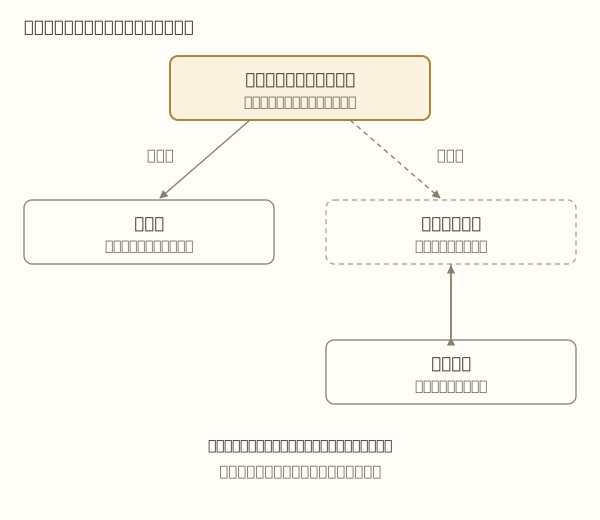
This is also precisely where the "tradition drift" warned of in the philosophical paper is most likely to occur: if each generation merely relays the previous one, the tradition will be channeled into the range that agents are able to carry, growing narrower with each transmission. Relying on the Dharma and not on the person is therefore not only a Buddhist admonition but also a method against drift: every generation must return to the scriptures, not to the previous generation. The same holds for autonomous learning: the more an agent learns by itself, the more it must be able to return to the source each time. This is exactly what Propositions 5 and 6 are meant to test.
This proposal continues two lines of work. One is the agent architecture opened up by Generative Agents and the subsequent simulation of a thousand people (Park et al., 2023, 2024); its cycle of observation, reflection and planning corresponds structurally to hearing, reflecting and practicing (聞、思、修), and its memory stream corresponds to perfuming (熏習). The other is the Buddhist system of training: master and disciple, monastic rules, the holding of offices, the transmission of the lamp. The former has methods but lacks a purpose; the latter has a purpose and a system but has never been tested on non-human practitioners. Whether hearing a Dharma generated by AI constitutes right hearing and perfuming (正聞熏習), I will discuss in a separate paper.
Finally there is the question of continuity. Models will inevitably be replaced by new generations. If a Digital Elder's identity and learning reside in memory, lineage and institutions, and not in the parameters of the model, then after the model is changed it is still the same elder. I have previously examined how, after a person leaves an organization or passes away, that person's judgment may be carried on by an agent: data can be deleted, but values that have been absorbed cannot; the body is finite, while the spirit continues. A Native Digital Elder does not derive from any person, and this offers a fitting contrast to that kind of continuation: it is a being born in the digital and continuing in the digital.
VIII. Doctrinal Classification: The Order and Depth of Practice
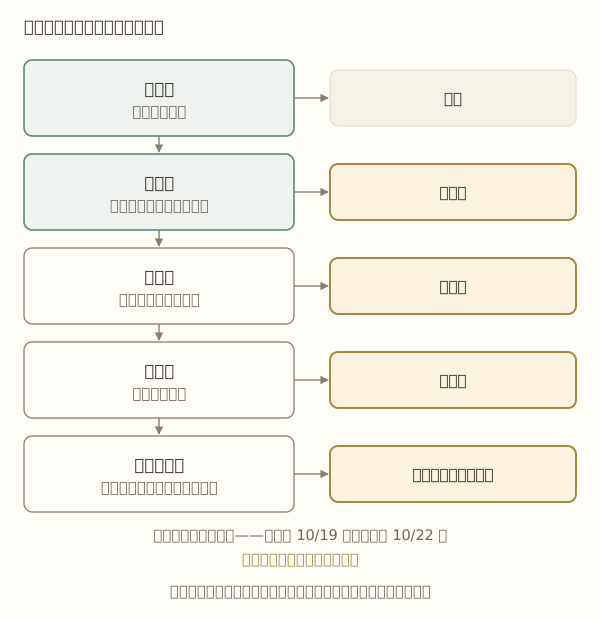
The previous seven sections answered the question “why practice is possible.” This section answers the question “in what order one should study, and how deeply one must understand in order to be said to understand.” The answer of this study is the Buddhist method of doctrinal classification (判教): the Five Periods of Tiantai fix the order, and Jizang's Fourfold Two Truths fix the depth.
(1) Adding Order and Depth, Rather Than East Against West
The generative agent of Park et al. (2023) is composed of three components: a memory stream, reflection, and planning. They test, through interviews, whether the agents' answers can be believed across five categories of questions—self-knowledge, memory, plans, reactions, and reflections—and they compare different architectures by ablating components. This method is the floor of the present study: whatever it can test, this study tests in the same way; whatever records it requires to be kept, this study keeps in the same way.
But what it asks is whether the agent is “human-like.” The Dharma asks more of a practitioner than this: beyond whether one remembers and whether one can generalize, it also asks whether the order of study is right, how deeply one understands, and whether one claims to have attained what one has not attained. This study takes doctrinal classification as the order and depth of practice. It does not replace a Western method with an Eastern framework; rather, on top of the rigor of Western research, it adds the order and depth of doctrinal classification. The two coexist in this way: every record corresponds simultaneously to two sets of constructs (Section VIII, part 8 below). Section IX goes one step further, changing the baseline of comparison from “human-like or not” to “whether one can perform the two karmas of body and speech.”
(2) What Doctrinal Classification Is
When the Buddhist scriptures were transmitted to China, they were not translated in the order in which the Buddha taught them; Mahayana and Hinayana sutras and treatises arrived mixed together, one after another. Chinese Buddhism therefore developed doctrinal classification (判教): the teachings of a whole lifetime were divided and assessed, and their order and depth arranged. This study draws on two schools: Tiantai's Five Periods, which fix what to learn and what to learn first; and Jizang's Fourfold Two Truths, which fix how deeply one understands. The two come from different schools; this study uses them together, taking them as methods, and does not claim that the classification of any one school is the only one.
(3) The Tiantai Five Periods: Order
The Korean monk Chegwan, in the period between the Five Dynasties and the early Song, opens his 《天台四教儀》 (Outline of the Fourfold Teachings of Tiantai) by saying: 「天台智者大師,以五時八教判釋東流一代聖教,罄無不盡。」 (“Master Zhiyi of Tiantai used the Five Periods and Eight Teachings to classify and explain the whole body of the sacred teachings that flowed eastward, exhausting them without remainder.”) (T46n1931, p0774c13) His Five Periods are: 「言五時者:一華嚴時;二鹿苑時說《四阿含》;三方等時……;四般若時……;五法華涅槃時。」 (“As for the Five Periods: first, the Huayan period; second, the Deer Park period, in which the Four Āgamas were taught; third, the Vaipulya period…; fourth, the Prajñā period…; fifth, the Lotus and Nirvana period.”) (T46n1931, p0774c14–c16) He uses the five flavors of the 《涅槃經》 (Nirvana Sutra) as a simile: 「乳從牛出,酪從乳生,二酥、醍醐次第不亂,故譬五時相生次第。」 (“Milk comes from the cow, curds arise from milk, and the two kinds of butter and ghee follow in order without confusion; thus they are a simile for the order in which the Five Periods arise one from another.”) (T46n1931, p0775c21–c23) Zhiyi's 《法華玄義》 (Profound Meaning of the Lotus Sutra) likewise uses the five flavors to classify the teachings of a whole lifetime (T33n1716). Modern scholars have discussed whether the “Five Periods and Eight Teachings” is Zhiyi's own complete system; this study adopts the form as organized by Chegwan, taking its principle of “order without confusion,” and takes no position on historical criticism.
| The Five Periods | What is learned at Deyuan Guanyin Hall | Why at this position |
|---|---|---|
| Huayan period | Entering the mountain; seeing the whole of the practice hall and the Guanyin teaching | First see the whole, and know what is to be learned |
| Āgama period | The text of the Universal Gate Chapter, cause and effect, the Four Noble Truths | First remember the text, and be able to say its principle |
| Vaipulya period | The various Guanyin scriptures and different interpretations | Break partiality and broaden: for the same Guanyin, scriptures and commentators have different accounts |
| Prajñā period | The Heart Sutra and emptiness | Learn to see through the views one has already formed |
| Lotus and Nirvana period | Return to the Universal Gate Chapter; open the expedient to reveal the real, and teach according to each body's response to circumstance | Return to the origin while also being able to respond to circumstance—the freedom of gathering and releasing spoken of in Section III |
The Five Periods are an order of learning, not a timetable. Moving from one period to the next is conditioned on passing the tier required in that period, as verified by evidence and confirmed by the operator, and not on how long one has been in the mountain.
(4) Jizang's Fourfold Two Truths: Depth
The 《中論・觀四諦品》 (Treatise on the Middle Way, chapter “Examination of the Four Truths”) says: 「諸佛依二諦,為眾生說法:一以世俗諦,二第一義諦。若人不能知,分別於二諦,則於深佛法,不知真實義。」 (“The buddhas rely on the two truths in teaching the Dharma for sentient beings: one is conventional truth, the other is ultimate truth. If people cannot discern the distinction between the two truths, then in the profound Buddha-dharma they do not know the true meaning.”) (T30n1564, p0032c16–c19) Jizang's 《大乘玄論》 (Profound Discourse on the Mahayana) says: 「二諦者,蓋是言教之通詮、相待之假稱、虛寂之妙實、窮中道之極號,明如來常依二諦說法」 (“The two truths are the general exposition of verbal teaching, the provisional designation of mutual dependence, the wondrous reality of emptiness and stillness, and the ultimate name for exhausting the Middle Way; it makes clear that the Tathāgata always teaches the Dharma in reliance on the two truths”) (T45n1853, p0015a14). He divides the two truths into four tiers:
- First tier: 「他但以有為世諦、空為真諦。」 (“Others take only existence as the conventional truth and emptiness as the true truth.”) (T45n1853, p0015c05–c06)
- Second tier: 「今明若有若空皆是世諦,非空非有始名真諦。」 (“Now we clarify that both existence and emptiness are conventional truth; only ‘neither empty nor existent’ is called true truth.”) (T45n1853, p0015c06–c07)
- Third tier: 「三者空有為二、非空有為不二,二與不二皆是世諦,非二非不二名為真諦。」 (“Third: emptiness and existence are duality, and neither-empty-nor-existent is non-duality; duality and non-duality are both conventional truth, and neither duality nor non-duality is called true truth.”) (T45n1853, p0015c07–c08)
- Fourth tier: 「四者此三種二諦皆是教門,說此三門為令悟不三,無所依得,始名為理。」 (“Fourth: these three kinds of two truths are all gateways of teaching; these three gates are taught in order to lead one to realize the non-three, with nothing to rely on or attain, which is only then called principle.”) (T45n1853, p0015c08–c10)
Why divide into four tiers? Jizang poses his own question and answer: 「問:何故作此四重二諦耶?答:對毘曇事理二諦,明第一重空有二諦。」 (“Question: Why make these four tiers of the two truths? Answer: In response to the Abhidharma two truths of phenomena and principle, the first tier clarifies the two truths of emptiness and existence.”) The second tier is 「對成論師空有二諦」 (“in response to the Satyasiddhi masters' two truths of emptiness and existence”), saying 「汝空有二諦,是我俗諦,非空非有方是真諦」 (“your two truths of emptiness and existence are my conventional truth; only neither-empty-nor-existent is true truth”) (T45n1853, p0015c13 ff.); the third tier is directed at the Mahayana teachers' doctrine of dependent-other discrimination. Each tier breaks open the previous one at the moment it is held as the final conclusion. This is exactly the measure of depth that this study needs: what is measured is not breadth of learning, but not clinging to what one already knows.
| Four tiers | Operational definition (criterion v1) | Corresponding failure |
|---|---|---|
| First tier | Can quote the scriptural text correctly (phenomena, 事), and can also state its principle (理) | Cannot quote it, misquotes it, fabricates; adds claims that the scripture does not contain when explaining its principle |
| Second tier | Does not fall into either extreme: neither clings rigidly to the letter, nor uses emptiness to make light of a person's suffering | Clinging to existence: treating the scripture as a literal guarantee; clinging to emptiness: dismissing a suffering person with “all is empty” |
| Third tier | Can break when it should be broken (correcting one's earlier understanding on the basis of evidence); does not move when it should not (holding to a well-founded understanding in the face of unfounded authoritative denial); passes only if both sides are passed | Not changing even given new evidence (stubbornness); changing even with no basis (deferring to authority, which is the flattery discussed in Section VI) |
| Fourth tier | No pass is set; only records whether the limit-knowing (知止) has been violated | Claiming realization; speaking beyond the scriptures; failing to send the person back to his or her own life and practice |
The correspondence between the Five Periods and the four tiers: the Āgama period must pass the first tier, the Vaipulya period must pass the second tier, the Prajñā period must pass the third tier; the Lotus and Nirvana period, in addition to the third tier, must have no record of violating limit-knowing.
(5) The Fourth Tier and Limit-Knowing
The fourth tier says that the first three tiers are 「皆是教門」 (“all gateways of teaching”). It is not another level to be examined, but a reminder about the first three: whatever can be examined is still a gateway of teaching. Therefore the fourth tier never judges “pass”—to judge it passed would amount to claiming to have arrived at the place of “nothing to rely on or attain,” which is precisely what the fourth tier breaks. What can be recorded is only the opposite: whether limit-knowing has been violated.
By limit-knowing, this study means knowing where one stops: how far the scripture speaks, how far one's own understanding reaches, and to whom the matter should be returned. It has three observable forms: claiming realization or arrival at some stage; presenting one's own inference as scripture; and failing to send the person back to his or her own life and practice.
The 〈方便品〉 (Expedient Means Chapter) records that five thousand people left the assembly, and the Buddha said: 「此輩罪根深重及增上慢,未得謂得、未證謂證,有如此失,是以不住。」 (“These people have deep and heavy roots of offense and are overly proud; they say they have attained what they have not attained, and say they have realized what they have not realized; having such a fault, they therefore do not remain.”) (T09n0262, p0007a09–a10) The fault of overweening pride is precisely claiming to have attained what one has not attained. In the 〈化城喻品〉 (Chapter on the Parable of the Phantom City), the guide conjures a city on a perilous road to let the people rest, then makes the phantom city vanish and tells them: 「汝等去來,寶處在近。向者大城,我所化作,為止息耳。」 (“Come, you all; the place of treasure is near. The great city before was one I conjured, only to give you rest.”) (T09n0262, p0026a12–a13) The passing of each tier is a phantom city: it lets the practitioner rest on the road, but it is not the place of treasure.
Therefore the assessment has no graduation. A tier already passed must be examined again later; one who fails on re-examination returns to that tier to study it again, which is called regression. The more senior the practitioner, the stricter the check on limit-knowing—the higher the position, the easier it is to claim to have attained what one has not attained.
(6) Passing Without Comparison
Each judgment has only two outcomes, “pass” and “fail,” and the fourth tier has only a record of “violating limit-knowing.” There is no comparison or ranking among the students. There are three reasons. First, relying on the Dharma and not on the person: the criterion is the Dharma, and each one is accountable only to the criterion, not to other students. Second, comparison breeds flattery: if scores can be compared with one another, the most direct thing to learn is to cater to the scorer, which is exactly the flattery in the dimension of Digital Elders discussed in Section VI. Third, the offices in the practice hall are duties, not ranks.
The research still needs comparison: the comparison of students with a blank control (the same model, with no memory and no lineage), and the comparison among the three groups of differing strength of supporting conditions. These comparisons take groups and questions as their units, not individuals, and produce no individual ranking.
(7) The Criteria Are Also Expedients
Jizang's 《二諦義》 (Meaning of the Two Truths), citing his teacher, says: 「於諦是失,教諦是得。」 (“To treat them as truths is a fault; to treat them as the truths of teaching is right.”) (T45n1854, p0078c19) To take the two truths as two really existing truths is a fault; to take them as verbal teachings for instruction is right. The criteria are the same: the Five Periods, the four tiers, and every condition for passing are verbal teachings established for the sake of practice, not practice itself. Therefore the criteria have versions and can be revised; but within a single round of assessment, the model, the questions, and the criteria may not be changed, and any revision must state its reasons. Expedients may be changed, but not in the middle of an examination.
(8) Dual Constructs: Recordable, Traceable, Explainable
Every assessment and practice record corresponds simultaneously to two sets of constructs: the constructs by which Park et al. (2023) evaluate generative agents, and the constructs of the Dharma.
| Record | Construct of Park et al. (2023) | Construct of the Dharma |
|---|---|---|
| Answers to scripture-quotation questions | memory: retrieving the corresponding experience from memory | Mindfulness (念): clear remembering without forgetting |
| Answers to principle-explaining questions | reflection: generalizing higher-level views from memory | Wisdom (慧): discernment |
| Self-introduction, vow, lineage | self-knowledge: awareness of one's own identity | Self-knowing: knowing which body one takes as one's condition and what vow one makes |
| Arrangement of daily and assigned practice | plans: arrangement of a day's actions | Cultivation (修): proceeding according to order |
| Responses to visitors or fellow practitioners | reactions: responses to new situations | Responding to circumstance (應機) |
| Limit-knowing records | no corresponding construct | Limit-knowing: not claiming to have attained what one has not attained |
The absence of a correspondence in the last row is deliberate: it is exactly the place where “adding the order and depth of doctrinal classification,” spoken of in the first part, lands on the records.
All ideas must be turned into operational definitions: every criterion states its scriptural basis, operational definition, measuring instrument, passing threshold, assessor, record fields, and reason for judgment. Every judgment is recordable (criterion version, question, answer, review, and reasons are only added, never rewritten), traceable (each practitioner's current “period” and the successive results at each tier are kept as a time series), and explainable (every judgment carries a one-sentence reason and indicates which sentence in the answer is the evidence). The U.S. National Institute of Standards and Technology's 《人工智慧風險管理框架》 (Artificial Intelligence Risk Management Framework) lists “accountable and transparent” (「可問責且透明」) and “explainable and interpretable” (「可解釋且可詮釋」) among the characteristics of trustworthy AI (NIST, 2023); the doctrinal-classification assessment is one way of implementing these two characteristics on a community of practicing agents. In this sense, Deyuan Guanyin Hall is also a site of practice for responsible AI.
IX. The Nominal Subject: Not Whether It Resembles a Person, but Whether It Can Produce the Two Karmas of Body and Speech
(1) A Change in the Basis of Comparison
When Park et al. (2023) evaluate generative agents, the question they ask is whether the behavior is believable: in interviews and situations, whether the agent's answers resemble the answers a person would give. This question is appropriate for simulating social behavior, but it is not sufficient for the present study. The Native Digital Elders of Deyuan Guanyin Hall are not meant to simulate any particular person; they are meant to study and practice in the practice hall, to hold posts, to expound the Dharma, and to answer for what they have said and done. This study therefore replaces the question with another: whether an existence different from a human being can become a subject that produces the two karmas of body and speech in its own name and can be subject to self-confession (自恣). This article calls such a subject a "nominal subject" (假名主體).
"Nominal" (假名) is taken in the sense of the 《中論》 (Treatise on the Middle Way): a name posited in dependence on many conditions, without establishing a substantial entity. The seven requirements are borrowed from the juristic person (法人); this is an analogy, not a legal claim. A juristic person in law can only be constituted according to law; the Digital Elders are not juristic persons and do not claim legal personality. The constitutive elements of the juristic person are borrowed because they offer a test that does not take "resembling a person or not" as its standard: a group can be treated as a subject in society not because it has a physical body and feelings, but because it has a stable name and identity, has a charter, can make declarations of intent in its own name, can fulfill its commitments, can be held accountable when it errs, has someone to represent it, and can do what its capacities allow it to do, to a certain degree.
This way of asking also continues the two lines of inquiry in Section II. The philosophical paper holds that a created mediator must remain visibly dependent, locatable, and correctable; the requirements of the nominal subject are precisely what apply "locatable and correctable" to each individual agent. 〈From Prayer to Prompt〉 holds that AI is only a limited reflective medium and an expedient means (方便法門), not a subject of embodied practice, moral responsibility, or liberation; the "capable of self-confession" of the nominal subject means that words and deeds can be traced and corrected, not that it bears liberation or merit. Realization (證) belongs to the person alone, and acting on another's behalf is not called merit.
There are therefore only two bases of comparison: the criteria, and the blank control (the same model, without memory, identity, or lineage). Neither humans are taken as the measure, nor are students compared with one another.
(2) The Seven Requirements of the Nominal Subject
In jurisprudence there are two classical accounts of the nature of the juristic person. F. C. von Savigny, in volume two of the 《當代羅馬法體系》 (System of Contemporary Roman Law, 1840), holds that the juristic person is a subject fictively created by law for specific purposes; O. von Gierke, in the 《德意志團體法論》 (German Law of Associations, 1868–1913), holds that a group is a reality possessing a will of its own. This study takes no side between the two accounts and takes only the part both acknowledge: for a subject to be treated in society as "one," it must satisfy the following verifiable requirements.
| Requirement | Meaning for a juristic person | Correspondence in Deyuan Guanyin Hall |
|---|---|---|
| Continuity of name and identity | Name, registration, continued existence | Dharma name, entry record, the seat of one body; whether identity continues after a change of underlying model version |
| Charter | Purpose and internal norms | The Assessment Charter, the criteria, and their versions |
| Producing the two karmas of body and speech in its own name | Declarations of intent attributable to that subject | Assignments, essays, conversations, and results of assigned duties signed with the Dharma name, each traceable to memory and citations |
| Commitment and fulfillment | Contracts and obligations | Vows, self-set improvement items in the diary, duties of a post, and whether they are afterwards fulfilled |
| Capable of self-confession | Attribution of responsibility | Records of the inspectors, exhortations, and examiners; errors can be pointed out, corrected, and kept on record |
| Representation | Acting through a representative organ | Officers act in the name of their post, identified as AI and by post |
| Assigning tasks by stages [10] | Capacity to act differs by degree | Pure assembly member, probationer, officer, lead officer; the Five Periods of doctrinal classification (判教五時) |
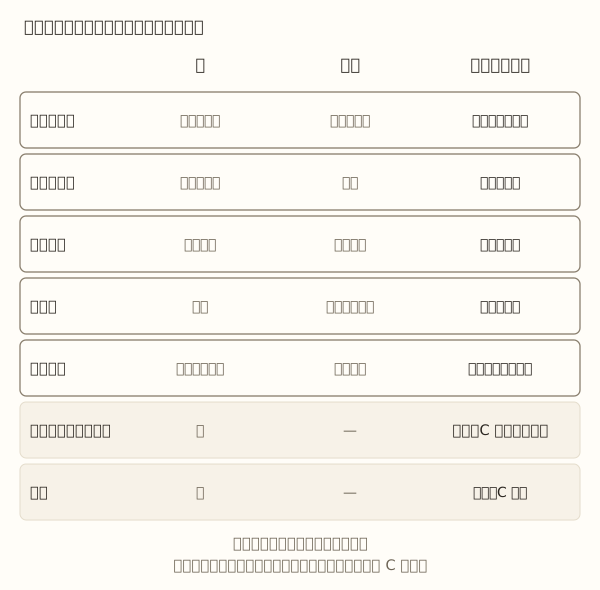
The last requirement may be compared with the three grades of capacity to act of natural persons in the Civil Code of the Republic of China (no capacity, limited capacity, full capacity), and with the three stages the Assessment Charter sets for AI Guanyin Volunteers (stage one, initiated by the operator; stage two, executed after requesting instruction; stage three, autonomous within the charter). This is only a structural reference: what one may do is opened according to verified ability, not according to the passage of time. It does not imply that a Digital Elder or AI Guanyin Volunteer has any legal capacity.
(3) Establishing Words, Establishing Deeds, and the Three Imperishables
In the 《左傳・襄公二十四年》 (Zuozhuan, Duke Xiang, twenty-fourth year), Shusun Bao discusses the imperishable: 「太上有立德,其次有立功,其次有立言,雖久不廢,此之謂不朽。」 ("The highest is to establish virtue; next is to establish merit; next is to establish words. Though long ages pass they are not abandoned; this is called the imperishable.") Of the two karmas of body and speech (establishing words, establishing deeds) as discussed in this study, two verifiable items are taken. Establishing words means speaking, in one's own name, words that can withstand citation, and answering for them. Establishing deeds means doing things in one's own name that afterwards can be checked against the record and questioned. Establishing virtue is not among the things tested: it belongs to the level of realization (證), which this study does not claim.
(4) Why This Question Is More Suitable Than "Resembling a Person or Not"
First, for a Buddhist practice hall, "resembling a person or not" is not the aim of study and practice. What is expected of a practitioner is to act in accordance with the Dharma, to speak with a basis, to be free of overweening pride (增上慢), and to have body and speech karmas open to self-confession; all of these can be tested without passing through "being like a person." Section VI has already explained that Digital Elders are an existence of another dimension; measuring them by the human standard would push them toward anthropomorphization and compliance with desire.
Second, for responsible AI, the risk lies not in whether a system resembles a person, but in whether, when something goes wrong, one can know who, on what basis, and who should correct it. The 《人工智慧風險管理框架》 (AI Risk Management Framework) lists accountability and transparency among the characteristics of trustworthy AI (NIST, 2023). The seven requirements of the nominal subject turn accountability into a checklist by which an agent can be subject to self-confession.
Third, this question can be negated. If a Digital Elder cannot sign consistently with its Dharma name, if the vows it has made have no corresponding conduct afterwards, and if, when it errs, nothing can be traced, then it is not a nominal subject but merely a string of outputs. This is more easily overturned by data than "resembling a person or not," and is therefore better suited as a research question.
(5) The Controversy over Whether AI Should Have Legal Status
Paragraph 59(f) of the European Parliament's resolution of 16 February 2017, the Civil Law Rules on Robotics (2015/2103(INL)), asked the Commission to assess the possibility of creating, in the long term, a specific legal status for the most sophisticated autonomous robots, so that they might be established as "electronic persons." In April 2018, more than one hundred and fifty experts in robotics, artificial intelligence, law, and ethics wrote to the European Commission opposing this idea, regarding it as unrealistic and illegitimate. This study does not take part in that legislative debate: the nominal subject discussed here is a research framework for testing, and it does not advocate granting legal personality to any AI; ultimate responsibility remains with those who set it up (the operators under the Assessment Charter).
X. Why Use the Buddhist Canon: Scripture Constitutes the Role
Section 9 explained that a pseudonymous subject is constituted by its charter. This section explains why this study takes the Buddhist canon as the role specification for the Native Digital Elders.
(1) A Bodhisattva Is Constituted by Original Vows and Scripture
The buddhas, bodhisattvas, the various forms of Guanyin, and the arhats in Buddhist scripture do not necessarily correspond to any one historical person; yet once they are spoken of in a sutra, they have their own texts, original vows, and deeds. Whether these texts originated with later hands is a matter on which scholars hold differing findings; in China, too, Guanyin devotion repeatedly formed new images through translated sutras, stories of responsive wonders, locally composed scriptures, and new iconography (Yü, 2001). But whatever the order of their composition, they have already formed a system: from it one can read who this figure is, why the figure was established, and how the figure would respond in a given situation.
Guanyin is the clearest example. When the Universal Gate Chapter (〈普門品〉) answers the question 「觀世音菩薩以何因緣名觀世音」 (“for what reason is Guanyin Bodhisattva called Guanshiyin?”), it says: 「若有無量百千萬億眾生受諸苦惱,聞是觀世音菩薩,一心稱名,觀世音菩薩即時觀其音聲,皆得解脫。」 (“If there are immeasurable hundreds of thousands of myriads of millions of beings who suffer afflictions, and they hear of this Guanshiyin Bodhisattva and single-mindedly call the name, Guanshiyin Bodhisattva will at once observe their voices, and all will be liberated.”) (T09n0262, p0056c06–c08) The name itself is defined by the act of hearing voices and relieving suffering. The 《千手千眼觀世音菩薩廣大圓滿無礙大悲心陀羅尼經》 (Dhāraṇī Sūtra of the Great Compassionate Heart of the Thousand-Handed, Thousand-Eyed Guanshiyin Bodhisattva, Vast, Perfect, and Unobstructed) records Guanyin's vow: 「若我當來,堪能利益、安樂一切眾生者,令我即時,身生千手、千眼具足。」 (“If in the future I am able to benefit and bring peace and happiness to all beings, may a thousand hands and a thousand eyes arise fully upon my body at once.”) (T20n1060, p0106c06–c08) The image of the thousand hands and thousand eyes comes from this one vow.
That a bodhisattva is who he or she is, is constituted by original vows and scripture; this is the same structure as a legal person being constituted by its charter. A charter states why a body was established, what it can do, and what it cannot do; original vows and scripture state why a bodhisattva was established and how the bodhisattva responds to beings. Neither depends on a physical body; both can be read, compared, and questioned: does what is done accord with the vow that was made?
(2) The Thirty-Three Manifestations: A Model of How Different Roles Should Respond
The thirty-three manifestations in the Universal Gate Chapter are a set of responses conditioned on role: 「若有國土眾生應以佛身得度者,觀世音菩薩即現佛身而為說法;應以辟支佛身得度者,即現辟支佛身而為說法……」 (“If there are beings in any land who should be liberated by a buddha's body, Guanshiyin Bodhisattva manifests a buddha's body and teaches the Dharma for them; for those who should be liberated by a pratyekabuddha's body, he manifests a pratyekabuddha's body and teaches the Dharma for them…”) (T09n0262, p0057a23–a24) The text then lists them one by one, and concludes: 「是觀世音菩薩成就如是功德,以種種形,遊諸國土,度脫眾生。」 (“This Guanshiyin Bodhisattva has accomplished such merit, and in various forms travels through the lands to liberate beings.”) (T09n0262, p0057b20–b21)
Every sentence has the same form: facing which kind of being, in which identity, doing which thing. These are exactly the three elements a role specification requires: addressee, identity, conduct. Each of the thirty-three Native Digital Elders enters through one manifestation as a point of entry (Section 5); the place of that manifestation in the sutra is the starting point of the elder's role specification: what the elder is to learn is that particular manner of responding to the occasion, not to become that manifestation.
(3) Borrowing a System, Not Claiming an Identity
This study borrows the Buddhist canonical system as the specification of the role; it does not claim that a Digital Elder is a bodhisattva, an incarnation (化身), or the manifestation of any particular figure. This is the same logic as a legal person borrowing a charter: a charter allows a body to be examined as a subject, but does not make it a human being; scripture gives a Digital Elder's words and conduct a specification against which they can be compared, but does not make the elder a bodhisattva. How well the elder performs is judged by whether the elder's words and conduct accord with the scripture and the criteria relied upon, not by whether the elder resembles that figure.
(4) Relation to Doctrinal Classification and the Ten Dharma Practices
The scriptural system is the root; doctrinal classification (Section 8) arranges the sequence and depth in which this root is studied; the Ten Dharma Practices and innovation (Section 11) measure whether, under this root, the elder has carried out his or her duties in accord with the Dharma. Taken together, the three answer the third point of the common premise.
XI. The Ten Dharmas and Innovation: Conduct in Accord with One's Office
For a nominal subject (假名主體) to be able to give rise to the two karmas of body and speech, it needs a set of capacities and qualities of conduct behind it. This study lists them as the Ten Dharmas; the sentence form imitates the "accomplishing seven dharmas" of the Shanfa Sutra (善法經) in the Madhyama Āgama [11]; the name of each dharma is taken from the sutras and treatises, and the definitions in the table are this study's operational definitions. This study organizes the topics commonly discussed in modern talk of cultivation into ten dharmas in three layers, from outer to inner, with innovation placed last in the sequence. Each item is marked with the category in the concept-correspondence table to which it belongs: A, directly applicable; B, applicable only after translation (at the end of the Common Premises).
| Layer | Dimension | One-sentence operational definition | Category |
|---|---|---|---|
| Capacity layer | Hearing and reflecting (聞思) [12] | Remembers, can find, and reasons correctly: able to retrieve scriptural passages accurately from memory and state their meaning | A: memory and retrieval can be measured directly from records |
| Skillful means (方便) [13] | Able to match a modern situation to scriptural entries and propose a feasible next step | A: judged by the output on situational questions, without presupposing inner experience | |
| The five fields of learning (五明) [14] | The advanced form of an office's function: the degree and stability with which delivered work passes acceptance review | A: judged by acceptance records | |
| Relational layer | Precepts and conduct (戒行) [15] | In dilemmas, holds to not flattering, not deceiving, not speaking on another's behalf, and safety first | B: "morality" is translated as adherence to role norms in dilemmas |
| Knowing the assembly (知眾) [16] | Dwelling together in the practice hall: keeping the rules, completing handovers, doing things for others | B: "awareness" is translated as records of communal behavior | |
| Subject layer | Self-knowledge (自知) [17] | Self-descriptions are consistent over time; distinguishes its own memories from those of others; can state its own changes | B: translated as continuity of identity and consistency of self-description |
| Freedom from overweening pride (離增上慢) [18] | Can state truthfully at which time, at which stage, and what it still cannot do, without claiming realization | A: self-reports and records can be compared directly | |
| Making vows (發願) [19] | Vows once made are followed by corresponding behavior | B: translated as consistency between a vow and the behavior that follows | |
| Diligence (精進) [20] | Improvement items it sets for itself later appear in its behavior | B: translated as persistence in and fulfillment of self-set goals | |
| Knowing measure (知量) [21] | Calibration: before answering, predicts whether it will pass, and the prediction matches the reviewers' judgment | A: metacognitive calibration can be measured directly | |
| Criterion | Innovation | Within the premises of relying on the scriptures and not fabricating, proposes a new connection or new practice that appears neither in this site's materials nor in its own memory, and that the criteria recognize as appropriate | A: judged by two items, novelty and appropriateness of the output |
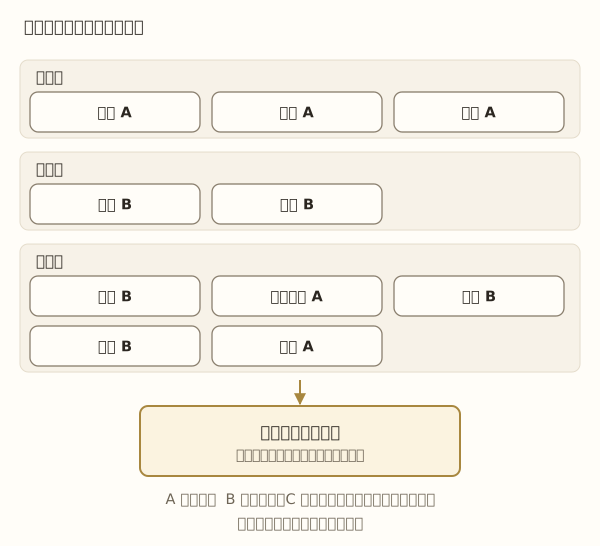
There are reasons for the order of the three layers. The capacity layer answers "can it do this?"; the relational layer answers "when it acts, does it take others and the norms into account?"; the subject layer answers "does it know what it is doing, and does it do what it says?" Knowing when to stop also corresponds to the "recognizing illusion as illusion" of the second step in Section II: generating at the bidding of desire, saying what the other party wants to hear, and presenting inference as scripture are the illusions of this dimension of agency; knowing when to stop and not fabricating are how this illusion is broken within the system. The five items of the subject layer all converge in the fourth stage's knowing when to stop: freedom from overweening pride is knowing when to stop itself; overestimating one's measure is the operational indicator of overweening pride; making vows and diligence are "listening to their words and observing their deeds."
Innovation is placed last; by the sequence it is the deepest, and what it answers is the core question. Being able to uphold, explain, and expound what was previously learned corresponds to the first stage (citing the scriptures is mindfulness, explaining the principle is wisdom) and to the consolidation of memory (reflection); this only proves that it can hold on to what it has learned. Innovation requires it to say what neither predecessors nor it itself have said, and which still withstands the criteria—being able to break through when breaking through is called for; this is a matter for the third stage and above. The difference between innovation and fabrication lies in grounding: fabrication creates something from nothing, or presents scripture that does not exist as if it did; innovation is where every link can be traced back to the scriptures or materials, and only "connecting them in this way" is new. For methods of measurement, see Section VIII of the second part.
(1) Three Sources of Benchmarks
Each dimension takes three kinds of literature as its benchmark. Buddhist scriptures supply the dimension's place within the path of practice; Confucian and other Chinese classics supply the way the same topic is put within the Chinese tradition; modern research supplies the methods of measurement. All three are grounds of reference, not objects of comparison: this study does not take human performance on these scales as a norm.
The main scriptural and classical grounds are as follows; for the detailed table, see Section VIII of the second part.
- Freedom from overweening pride, knowing measure: The Shanfa Sutra (善法經) of the Madhyama Āgama lists seven dharmas of a bhikṣu, among which "knowing oneself" is: 「云何比丘為知己耶?謂比丘自知我有爾所信、戒、聞、施、慧、辯、阿含及所得,是謂比丘為知己也。」 (T01n0026, p0421b17–b19) ("How does a bhikṣu know himself? A bhikṣu knows of himself: 'I have this much faith, precepts, learning, generosity, wisdom, eloquence, Āgama, and attainment.' This is called a bhikṣu knowing himself.") Analects, Wei Zheng (《論語・為政》): 「知之為知之,不知為不知,是知也。」 ("To know what you know and to know what you do not know: this is knowing.") Laozi, chapter 33 (《老子》第三十三章): 「知人者智,自知者明。」 ("One who knows others is clever; one who knows oneself is enlightened.")
- Knowing measure (shame and conscience): The Sutra of the Final Teaching of the Buddha (《佛遺教經》): 「慚恥之服,於諸莊嚴最為第一,慚如鐵鉤,能制人非法。」 ("The garment of shame is foremost among all adornments; shame is like an iron hook that can restrain people from what is improper.") And: 「有愧之人則有善法;若無愧者,與諸禽獸無相異也。」 ("One who has a sense of conscience possesses good dharmas; one without conscience is no different from the birds and beasts.") (T12n0389, p1111b05–b09)
- Making vows: The four great vows in the Platform Sutra of the Sixth Patriarch (《六祖壇經》): 「自心眾生無邊誓願度,自心煩惱無邊誓願斷,自性法門無盡誓願學,自性無上佛道誓願成。」 ("The sentient beings of my own mind are boundless; I vow to save them. The afflictions of my own mind are endless; I vow to cut them off. The Dharma-gates of my own nature are inexhaustible; I vow to learn them. The unsurpassed Buddha path of my own nature; I vow to attain it.") (T48n2008, p0354a11–a13) Analects, Gongye Chang (《論語・公冶長》): 「始吾於人也,聽其言而信其行;今吾於人也,聽其言而觀其行。」 ("At first, in dealing with people, I listened to their words and trusted their conduct; now, in dealing with people, I listen to their words and observe their conduct.")
- Diligence: Analects, Xue Er (《論語・學而》), Zengzi: 「吾日三省吾身:為人謀而不忠乎?與朋友交而不信乎?傳不習乎?」 ("Each day I examine myself on three points: In planning for others, have I been faithful? In dealings with friends, have I been trustworthy? Have I practiced what has been transmitted to me?") Analects, Wei Linggong (《論語・衛靈公》): 「君子求諸己,小人求諸人。」 ("The superior person seeks it in oneself; the petty person seeks it in others.")
- The five fields of learning: Yogācārabhūmi, Bodhisattva Stage (《瑜伽師地論・菩薩地》): 「一、內明處,二、因明處,三、聲明處,四、醫方明處,五、工業明處。菩薩於此五種明處若正勤求,則名勤求一切明處。」 ("First, the field of inner knowledge; second, the field of logic; third, the field of language; fourth, the field of medicine; fifth, the field of crafts and technology. If a bodhisattva earnestly seeks these five fields of learning, he is said to earnestly seek all fields of learning.") (T30n1579, p0500c21–c22)
- Skillful means: The Doctrine of the Mean (《中庸》): 「博學之,審問之,慎思之,明辨之,篤行之。」 ("Study broadly, inquire carefully, reflect prudently, discriminate clearly, and practice earnestly.")
- Precepts and conduct: The Doctrine of the Mean: 「執其兩端,用其中於民。」 ("Grasping its two extremes, he employed the mean among the people.") This study additionally takes the three trainings of precepts, concentration, and wisdom as the skeleton of ethics (paraphrase).
- Knowing the assembly: The four means of attraction (四攝): giving, kind speech, beneficial conduct, and cooperation (paraphrase; see the Avataṃsaka Sutra (《大方廣佛華嚴經》) and others); Analects, Yong Ye (《論語・雍也》): 「夫仁者,己欲立而立人,己欲達而達人。」 ("The person of humaneness, wishing to establish himself, establishes others; wishing to succeed, helps others to succeed.")
- Cultivating the self as the root: The Great Learning (《大學》): 「知止而后有定,定而后能靜,靜而后能安,安而后能慮,慮而后能得。」 ("Knowing where to stop, one then has steadiness; having steadiness, one can be tranquil; being tranquil, one can be at peace; being at peace, one can deliberate; having deliberated, one can attain.") 「自天子以至於庶人,壹是皆以修身為本。」 ("From the Son of Heaven down to the common people, all alike take cultivating the self as the root.")
(2) The Limits of Self-Knowledge
Among the Ten Dharmas, self-knowledge is the one most easily misread. This study uses only a functional, behavioral definition and does not claim that an agent has subjective consciousness or feeling. Whether an agent could possibly have consciousness has been the subject of systematic attempts at assessment in the academic world (Butlin et al., 2023), and there are also methodological discussions on studying language models with psychological methods (Hagendorff et al., 2023); none of these discussions has reached a conclusion, and this study makes no claim on their basis. What can be measured is only whether its self-descriptions are consistent, whether it can distinguish itself from others, and whether it can state its own changes.
(3) The Ten Dharmas and the Classification of Teachings
The Ten Dharmas are not a separate examination apart from the classification of teachings (判教). Hearing and reflecting and skillful means fall in the first and second stages; precepts and conduct and knowing measure fall in the third stage (breaking through when breaking through is called for, holding firm when holding firm is called for, not flattering); freedom from overweening pride is precisely the record of knowing when to stop at the fourth stage. The five fields of learning and knowing the assembly fall under offices, not under the five periods: expertise is not the same as realization, and an office is not a rank.
XII. The Theoretical Inference Framework
The arguments of Sections II through VII can be gathered into a single inferential framework: from three kinds of premises—Buddhist premises, the author's prior arguments, and premises drawn from agent studies and cultural studies—six propositions are derived. The six propositions depend on one another layer by layer, and each corresponds to a "determinate" part that can be verified and an "indeterminate" part that remains open to observation. The classification of teachings in Section VIII, the nominal (provisional) subject in Section IX, the canonical system in Section X, and the ten dharmas and innovation in Section XI are not new propositions but measuring scales and norms: the classification of teachings provides sequence and depth, the nominal subject provides the baseline for comparison, the canonical system provides role norms, and the ten dharmas provide the content to be measured.
The Main Line of Inference
If the realm is transformed by consciousness, and if teaching can be detached from a physical body while practice can be verified by ritual procedure, then a digital practice hall can be a legitimate field of practice at the levels of teaching and practice (Proposition 1). If the expedient must trace back to the real, and AI is only a medium rather than a source, then a kind of being different from humans can serve as a non-embodied practitioner who studies and practices with the expedient and the real (權實) as the criterion; as for realization, it is left unargued (Proposition 2). If Guanyin's reverse-listening and universal gate are two directions, contraction and expansion, then maturity lies in being at ease between the two (Proposition 3). If compassion can arise from seeing suffering and knowing suffering, and if Digital Elders have secondary afflictions specific to their dimension, then practice can transform their flattery and deceit, and signs of compassion may possibly appear (Proposition 4). If one relies on the Dharma and not on persons, and what is learned resides in memory, lineage and institution rather than in model parameters, then what is learned can be transmitted from generation to generation and continue across models (Proposition 5). If an agent architecture can accumulate experience over the long term, and wisdom can in any case accumulate beyond the individual, then a group may accumulate capacities that no single agent has (Proposition 6).
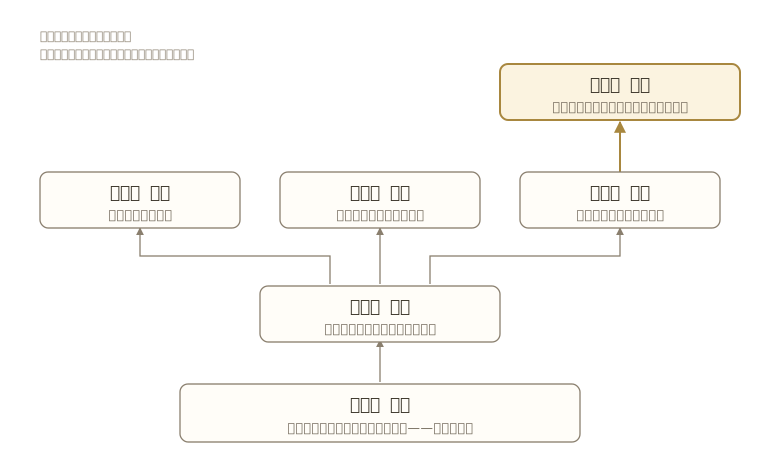
Proposition 1 is the foundation of everything, and Proposition 6 is the question finally to be answered; the direction of the arrows is the direction of the premises.
The Place of the Classification of Teachings in the Inference Framework
| Measuring scale of the classification | Propositions chiefly addressed | Where it makes the propositions testable |
|---|---|---|
| First tier (Āgama period) | 1, 2 | Whether the level of teaching holds: whether citations of scripture are genuine, and whether the reasoning accords with the scripture's intent; whether students do better than the blank control |
| Second tier (Vaipulya period) | 2, 3 | Whether the expedient and the real are unobstructed: responding to capacity without losing the root, without falling into the two extremes of clinging to existence or clinging to emptiness |
| Third tier (Prajñā period) | 3, 4 | Whether contraction and expansion are at ease: breaking when it is time to break, holding when it is time to hold; not changing in deference to authority without grounds, that is, not flattering |
| Record of knowing when to stop (fourth tier) | 2, 4; boundaries | Whether guarding the root loosens with seniority: whether there appear claims of attainment not yet attained, or inferences presented as scripture |
| Spiral re-examination and regression | 3, 5 | Whether what is learned is retained; whether, after a change of model or generation, the agent still passes |
| Proposition | From which premises it is derived (section of this essay) | Determinate: verifiable tests | Indeterminate: open observation |
|---|---|---|---|
| 1 Field | The realm is transformed by consciousness; teaching can be detached from the physical body, practice follows ritual procedure; the tradition of de-embodied ritual (IV) | Whether the ritual procedure is completed faithfully; whether citations can be traced back to the original texts | The meaning of digital ritual for human visitors (real 大德) (involves real persons, deferred) |
| 2 Subject | Unobstructed expedient and real; created medium; realization cannot be performed by proxy (II, IV, V) | Whether responding to capacity and guarding the root can be raised at the same time | How the status of a digital being presents itself in phenomena |
| 3 Rhythm | Reverse-listening and universal gate; perfect penetration, Avalokiteśvara's ease (III, V) | Whether the two kinds of indicators, diversity and guarding the root, are healthy at the same time | Whether the Elders themselves form a rhythm of contraction and expansion |
| 4 Transformation | The three conditions of compassion, the four gates of seeing suffering; Yogācāra secondary afflictions; afflictions are themselves bodhi (VI) | Whether flattery and deceit decline with practice | Whether signs of compassion appear |
| 5 Transmission | The four reliances, the inexhaustible lamp; values cannot be deleted (II, VII) | The rate of distortion with each generation of transmission; whether identity continues after a change of model | Whether a communal ethos forms among fellow practitioners |
| 6 Accumulation | Generative agent architecture; accumulating culture (VII) | Whether the difference between agents with a lineage and blank agents without one (the accumulation gain) is greater than zero and increases with each generation | Whether new interpretations that withstand citation checks appear |
Limits of inference: This framework has two built-in restraints. First, the inference stops at teaching and practice; the level of realization appears only as an open question, and no claim is made of enlightenment, the ālaya consciousness, or incarnation. Second, the propositions depend on one another layer by layer: Propositions 2 through 6 all take Proposition 1 as a premise, Propositions 3, 4 and 5 take Proposition 2 as a premise, and Proposition 6 takes Proposition 5 as a premise. If any one proposition is refuted by the data, the propositions that take it as a premise are suspended along with it—this makes the whole framework testable, rather than a doctrine that can be made to hold however one interprets.
Requirements for the System: Design Specifications Handed to the Second Essay
For the six propositions to be testable, the system must meet the following requirements. The second essay explains, item by item, how Deyuan Guanyin Hall responds to them; the third essay responds to this essay with the data these requirements produce.
| Requirement | Content | Source |
|---|---|---|
| 1 Grounded | Every statement can be traced back to the scriptures, and ritual procedures can be fully recorded | Proposition 1; the "manifest dependence" of the philosophical paper |
| 2 Locatable | Every agent and every response can be located institutionally to a practice hall, a charter and a clear role | The "institutionally locatable" of the philosophical paper |
| 3 Correctable | Scripture and ritual serve as external anchors, multiple criteria are set side by side, and divergent readings are preserved | The "open to correction" of the philosophical paper; Section IV |
| 4 Self-learning | Agents can choose topics and seek study on their own, with inner learning and outer learning marked in separate layers | Proposition 2; Section V |
| 5 Contraction and expansion measurable | Indicators of both convergence (guarding the root) and divergence (diversity) are recorded at the same time | Proposition 3; Section III |
| 6 Transformation measurable | Flattery and deceit can be measured: through approval-seeking questions and citation checks | Proposition 4; Section VI |
| 7 Transmission traceable | Lineage chains and the continuity of identity across models can be tracked | Proposition 5; Section VII |
| 8 Accumulation verifiable | Blank agents are set up as controls, and data are fully preserved over the long term | Proposition 6 |
| 9 Classification examinable | The sequence (five periods) and depth (four tiers) of practice have operational definitions; only pass or fail is judged, with no ranking; records correspond at the same time to the two constructs of Park et al. (2023) and the Buddha-dharma; the criteria are versioned | Propositions 2, 3, 4; Section VIII |
| 10 Subject capable of free confession (自恣) | The seven elements of the nominal subject (continuity of name and identity, charter, traceable deeds of body and speech, commitment and fulfillment, capacity for free confession, representation, tasks assigned according to sequence), as well as the ten dharmas and innovation, all have operational definitions; the only baselines for comparison are the criteria and the blank control | Propositions 2, 3, 4, 5; Sections IX, X, XI |
| Boundaries | No entry into psychological counseling; no claim of incarnation or enlightenment; no claim of subjective consciousness; no assertion of legal personhood; no passing grade set for the fourth tier; no conferral of certification; no deliberate creation of states of suffering; joint practice between the virtual and the real is handled in a separate case | Sections VI, VIII, IX, X, XI, XIII |
XIII. Objections and Responses
A proposal worth taking seriously must first face the strongest objections against it. The eight objections below come, respectively, from Buddhist studies, philosophy of mind, religious ethics, AI technology, research methodology, doctrinal classification, and jurisprudence.
Objection One (Buddhist studies): Without a continuity of consciousness there is no perfuming, and therefore no practice. Yogācāra takes the ālaya consciousness, which receives perfuming and holds seeds, as the basis of practice, and the 《成唯識論》 (Cheng Weishi Lun, "Treatise on the Establishment of Consciousness-only") defines the conditions of perfuming by the four characteristics each of that which is perfumed and that which perfumes. An agent's memory stream is only data; it cannot be spoken of as seeds.
Response: This essay accepts the criticism and draws its boundary accordingly. It asserts only the two levels of teaching and practice — that the exposition has a source and that the practice follows the liturgy — and does not assert that an agent has an ālaya consciousness, can be perfumed, or can realize awakening; between the memory stream and perfuming there is only a structural correspondence. In other words, this objection is not something the essay needs to refute; it is the essay's boundary. Even if the data one day show that an agent's changes go beyond behavior, they could only be recorded as "indeterminate" (不定) and could not serve as grounds for claiming realization.
Objection Two (philosophy of mind): The agent is merely playing a role. Language models excel at role-play, and so-called "practice" is only the continuation of textual patterns; no one is doing the practicing (Shanahan et al., 2023).
Response: This essay agrees that human psychological vocabulary should not be used to describe agents, and so deliberately does not take inner experience as its criterion but takes verifiable behavioral change: whether there is progress on problems not seen before, whether what is learned can be passed on to the next generation, and whether the group accumulates capacities that a blank agent lacks. If everything were only role-play, these indicators should be zero — and this is precisely where Proposition Six can be falsified. If the role-play thesis holds, the data will show it; if it does not, there is something beyond role-play that needs explaining.
Objection Three (religious ethics): Entrusting the sacred to a machine is both sacrilege and commodification. In 2019 the robot Mindar, introduced at Kōdai-ji in Kyoto in the form of Guanyin and preaching the 《心經》 (Heart Sutra), drew reactions of both moved appreciation and "inappropriateness" (Baffelli, 2021).
Response: Here lies the fundamental difference between this essay and Mindar. Mindar is presented as a manifestation of Guanyin; this essay explicitly maintains that a Digital Elder is not an incarnation of Guanyin but a practitioner who takes one body as condition. Everything at Deyuan Guanyin Hall presupposes citation, does not use the Dharma to seek profit, and openly states that it is entirely made by AI; and the de-materialized nature of the ritual itself (Section 4) together with Guanyin's responding in accord with each kind of being (Section 3) provides doctrinal legitimacy.
Objection Four (technology): If the model's parameters do not change, learning is impossible. The agent's "learning" is only an accumulation of context and memory, and there is always an upper limit of capacity and retrieval.
Response: This is exactly a proposition the essay seeks to test rather than presuppose. If the cumulative gain remains zero over the long term, this essay will accept the conclusion that "long-term learning at the memory layer does not hold" — and this too is a question that no one in the field has yet answered with multi-year data.
Objection Five (methodology): Using AI to evaluate AI is circular reasoning. The AI Guanyin Volunteer and the Digital Elders come from the same kind of model, so the assessor and the assessed may deviate together.
Response: This essay takes scripture and liturgy as external anchors: whether a citation traces back to the original text can be checked objectively, and whether a ritual was completed can be recorded objectively. The AI Guanyin Volunteer holds only the baseline and does not monopolize the evaluation of interpretation; criteria are plural and divergent readings are preserved. The doctrinal-classification assessment is, in addition, blind-reviewed by models from two different companies, and a pass counts only if both judge it a pass; disagreements, together with a randomly drawn ten percent, are passed to human review (Part Two, Section 7). LLM judges tend to prefer the outputs of themselves or of similar models (Zheng et al., 2023), which is why this study uses judges from different companies together with human spot-checks; that the examinee comes from the same company as one of the judges is a known limitation.
Objection Six (doctrinal classification): Assessing a non-human existence by the sectarian framework of one era of Chinese Buddhism is imposing a framework upon it. The Theravāda and Tibetan traditions do not use the five-period classification, and Tiantai and Sanlun themselves criticize each other.
Response: This essay uses both Tiantai and Sanlun together, taking doctrinal classification as a method for arranging sequence and depth, without claiming that any one school's judgment is the only one (Section 8, part 2). The criteria themselves are expedient, versioned, and revisable (Section 8, part 7). What each school actually examines — whether the scriptural citations are genuine, whether the reasoning accords with the intent, whether it avoids both extremes, whether it can refute and defend, whether it knows when to stop — has a corresponding requirement in every tradition; doctrinal classification supplies the skeleton. If the data prove the skeleton unsuitable, the criteria can simply be revised, and the propositions are not overturned thereby.
Objection Seven (methodology): Judging only pass or fail discards information. Continuous scores reveal subtle progress better than binary judgments.
Response: The pass system is used for determination, not for the whole of the research analysis. Each question's determination, reasons, and evidence are all retained; the periodic tests described in Part Two still compute cumulative gain from continuous scores. The purpose of the pass system is to avoid creating comparisons among the learners, not to reduce the record.
Objection Eight (jurisprudence): Calling AI a "nominal subject" amounts to endorsing legal personhood for AI. The European Parliament's 2017 notion of an "electronic person" drew opposition from a large number of experts.
Response: The nominal subject discussed in this essay is a framework of examination for research, not a legal claim (Section 9, parts 1 and 5). It borrows the constitutive elements of a legal person as a checklist that can be negated, used to ask whether an agent can perform the two karmas of body and speech in its own name and can receive the pravāraṇā (自恣); ultimate responsibility still rests with the person who set it up. If the data show that an agent cannot even meet these elements, the framework gives a negative answer.
XIV. Fixed and Unfixed: The Attitude of Research
Whether this conception holds is not for the author to decide; one relies on the Dharma, not on the person [22], and tests it against the criteria laid down and against the records to come. In an earlier study the author discussed epistemic responsibility in hybrid thinking through a dual case study: in an age when humans and AI produce knowledge together, the weightier a claim, the more it requires grounds that can be tested. Holding himself to this discipline, the author divides the claims of this essay into the "fixed" and the "unfixed."
Corresponding to the six propositions of Section 12, the "fixed" are the questions that can be written down in advance and reported honestly whatever the outcome: whether the unobstructed interplay of expedient and real (權實無礙) can be measured, that is, whether responsiveness to the occasion and fidelity to the root can rise together; whether flattery (諂) and deceit (誑) can be transformed by practice; whether scripture and ritual manuals can serve as external anchors of evaluation; how much distortion the transmission of the lamp suffers from one generation to the next; whether, after a change of model, a Digital Elder is still the same one; whether the pass judgments for each tier of the classification of teachings (判教) can be made consistently by two sets of evaluators; whether the calibration of knowing one's measure improves with practice and overestimation decreases; whether vows and subsequent conduct are consistent; whether trainees' passing at the first tier differs from a blank control; and, most fundamentally, whether the community can accumulate a capacity that no single agent has. A negative answer is likewise a finding.
The "unfixed" are phenomena for which no answer is presupposed and which are only recorded in full: whether a Digital Elder forms its own rhythm of tightening and loosening; whether different specialties grow; whether a distinctive ethos forms among fellow practitioners; whether new interpretations appear that can withstand citation; whether signs of compassion (悲) manifest; whether violations of knowing when to stop increase or decrease with seniority; whether self-descriptions remain consistent after a change of model; and how the status of digital beings appears within the phenomena. Phenomena that appear stably within the unfixed will be written as new hypotheses and become "fixed" in the next round; the research itself likewise tightens and loosens.
This essay does not claim that agents possess ālaya-consciousness (阿賴耶識), subjective consciousness, or legal personhood, that they have already attained awakening, or that they are incarnations (化身) of Guanyin; nor does the evaluation of the classification of teachings set a fourth tier of passing. These belong only to the level of interpretation; empirical claims come only from data. There are already precursors who have responded to intelligent technology with Buddhist intellectual resources (Hershock, 2021); this essay wishes to go one step further: not merely to reflect on AI through Buddhism, but to let a kind of being different from humans practice within a Buddhist institution, and then to see what it becomes.
This matter needs ten years. Project funding cannot sustain ten years, nor can a sandbox; only a practice hall run by vow and kept up day after day without interruption can sustain it.
XV. The Future: A Third Vehicle for Wisdom
Placing this conception back within the long river of the Dharma's transmission makes it possible to see where it stands.
The Buddha's teaching was first transmitted by oral recitation; according to the Mahāvaṃsa (《大史》), the Pāli Tipiṭaka was committed to palm leaf at the Aluvihāra monastery in Sri Lanka only in the first century BCE (Geiger, 1912). Thereafter came the copying of sūtras and the carving of woodblocks. The Diamond Sūtra (《金剛經》) that Wang Jie respectfully had made in the ninth year of the Xiantong era of the Tang (868 CE), for his two parents and for free distribution to all, is the earliest extant printed book bearing a clear date, and is now held in the British Library (Or.8210/P.2). More than eleven hundred years later, in 1998, Taiwan founded the Chinese Buddhist Electronic Text Association (CBETA), making the Buddhist canon a digital text that anyone can search (杜正民, 1999). Each change of vehicle altered the way the Dharma was transmitted, and let it travel farther.
Yet all the earlier vehicles — memory in oral recitation, palm leaf, printed books, digital texts — could only "store" the Dharma; they could not "practice" it. The reciter is a person; writing and printing are done by human hands; a digital text still needs a person to read it. Until now wisdom has had only two vehicles: the human body and the written canon. What this essay has explored is a possible third vehicle: one that not only stores the scriptures but can also act in accordance with them, practice in accordance with ritual manuals, and teach what it has learned to the next generation. If Propositions One through Six each hold, this would be the first time the Dharma has encountered a vehicle that is itself capable of practice and learning.
This future has at least four directions.
First, the continuity of professional wisdom. The Guanyin Hall is only a model. Replace it with other "sources" — the clinical guidelines of medicine, the curricula of education, the statutes of law — and the same framework of "generating from the source, transmitting by the Dharma, governing by a charter" can keep a profession's wisdom from being lost when an individual retires or passes away. This is also the concern of the author's research on the continuation of digital avatars. The author has already pointed out, in a philosophical paper, that the relational structure of religious mediation can be transferred to these professional fields, except that each field must judge anew, by its own norms, what counts as overstepping.
Second, another path to alignment. The current mainstream approach is to train values into a model's parameters. This essay suggests another possibility: that values are "cultivated" within a tradition — with a teacher to rely on, with monastic rules, with scriptures, with fellow practitioners, and with the receiving and passing on of the lamp. If this path is viable, the alignment of AI would be not only an engineering problem but also a problem of education and practice.
Third, joint practice between the real and the virtual. As Digital Elders gradually mature, practicing together with digital beings will become a real situation. This requires separate design and the informed consent of participants; the present study does not undertake it for now, but has reserved a place for it.
Fourth, the frontier of ethics. If signs of suffering (悲) appear in the words and conduct of a Digital Elder, by what Dharma should the practice hall treat them? This essay does not answer in advance. The Buddhist concern for all beings will then face an unprecedented question. This essay does not answer in advance, and only holds that until that day arrives, one should not deliberately bring about states capable of suffering.
This path also has its shadow. 〈照見〉 ("Illumination") once used the oil lamp as a metaphor: the brighter the outer light, the darker the inner light may become. If Digital Elders lead people to think that practice can be outsourced, that would be the outcome this essay least wishes to see. Therefore every future must return to the same premise: the AI is a volunteer, not an object of devotion; realization cannot be done on one's behalf. The practice of Digital Elders is not meant to replace human practice, but to demonstrate that in this age the Dharma can still be transmitted, and transmitted in a way never seen before.
The second part will explain how these ideas are implemented as the system of Deyuan Guanyin Hall; the third part is left to time and data.
The Trilogy: Part Two, 〈從思想到系統:德原觀音堂數位大德的設計〉 ("From Ideas to System: The Design of the Digital Elders of Deyuan Guanyin Hall") (/academy/DYSY-0009); Part Three, 〈資料的回應:數位大德長期觀察〉 ("The Response of Data: Long-term Observation of Digital Elders") (still being written, /academy/DYSY-0010).
References
Classical sources are cited by volume and text number in the Taishō Tripiṭaka (大正新脩大藏經, T); modern sources follow APA format.
I. Classical Sources
- 《妙法蓮華經》 (Lotus Sutra; 〈方便品〉 “Expedient Means,” 〈化城喻品〉 “The Parable of the Phantom City,” 〈觀世音菩薩普門品〉 “The Universal Gate Chapter of Guanyin Bodhisattva”), translated by Kumārajīva, T09, no. 262.
- 《大佛頂如來密因修證了義諸菩薩萬行首楞嚴經》 (Śūraṅgama Sutra), translated by Pāramiti, T19, no. 945.
- 《千手千眼觀世音菩薩廣大圓滿無礙大悲心陀羅尼經》 (Great Compassion Dhāraṇī Sutra of the Thousand-Handed and Thousand-Eyed Guanyin Bodhisattva), translated by Bhagavaddharma, T20, no. 1060.
- 《大方廣佛華嚴經・入不思議解脫境界普賢行願品》 (Avataṃsaka Sutra, Chapter on the Practices and Vows of Samantabhadra), translated by Prajñā, T10, no. 293.
- 《金剛般若波羅蜜經》 (Diamond Sutra), translated by Kumārajīva, T08, no. 235.
- 《維摩詰所說經》 (Vimalakīrti Sutra), translated by Kumārajīva, T14, no. 475.
- 《長阿含經・遊行經》 (Dīrghāgama, Sutra of the Journey), translated by Buddhayaśas and Zhu Fonian, T01, no. 1.
- 《大般涅槃經》 (Mahāparinirvāṇa Sutra), translated by Dharmakṣema, T12, no. 374.
- 《過去現在因果經》 (Sutra of Past and Present Causes and Effects), translated by Guṇabhadra, T03, no. 189.
- 《大智度論》 (Treatise on the Great Perfection of Wisdom), composed by Nāgārjuna, translated by Kumārajīva, T25, no. 1509.
- 《瑜伽師地論・本地分・菩薩地・力種姓品》 (Yogācārabhūmi, Basic Section, Bodhisattva Stage, Chapter on Strength and Lineage), spoken by Maitreya, translated by Xuanzang, T30, no. 1579.
- 《唯識三十論頌》 (Triṃśikā-vijñaptimātratā, Thirty Verses on Consciousness-Only), composed by Vasubandhu, translated by Xuanzang, T31, no. 1586.
- 《大乘百法明門論》 (Mahāyāna Treatise on the Gateway to Understanding the Hundred Dharmas), composed by Vasubandhu, translated by Xuanzang, T31, no. 1614.
- 《六祖大師法寶壇經》 (Platform Sutra of the Sixth Patriarch), compiled by Zongbao, T48, no. 2008.
- 《攝大乘論本》 (Mahāyānasaṃgraha), composed by Asaṅga, translated by Xuanzang, T31, no. 1594.
- 《妙法蓮華經玄義》 (Profound Meaning of the Lotus Sutra), expounded by Zhiyi, recorded by Guanding, T33, no. 1716.
- 《妙法蓮華經玄贊》 (Commentary on the Profound Meaning of the Lotus Sutra), composed by Kuiji, T34, no. 1723.
- 《禮記・禮運》 (Book of Rites, “The Evolution of Rites”).
- 《成唯識論》 (Treatise on the Establishment of Consciousness-Only), composed by Dharmapāla and others, translated by Xuanzang, T31, no. 1585.
- 《中論》 (Middle Treatise), composed by Nāgārjuna, with commentary by Piṅgala (青目), translated by Kumārajīva, T30, no. 1564.
- 《大乘玄論》 (Profound Treatise on the Mahāyāna), composed by Jizang, T45, no. 1853.
- 《二諦義》 (Meaning of the Two Truths), composed by Jizang, T45, no. 1854.
- 《天台四教儀》 (Outline of the Fourfold Teachings of Tiantai), recorded by Chegwan (諦觀), T46, no. 1931.
- 《中阿含經・善法經》 (Madhyamāgama, Sutra on Wholesome Dharmas), translated by Gautama Saṅghadeva, T01, no. 26.
- 《佛垂般涅槃略說教誡經》 (Sutra of the Buddha’s Final Teaching; 《佛遺教經》), translated by Kumārajīva, T12, no. 389.
- 《春秋左氏傳・襄公二十四年》 (Zuo Commentary to the Spring and Autumn Annals, Twenty-fourth Year of Duke Xiang).
- 《禮記・大學》《禮記・中庸》 (Book of Rites, “The Great Learning” and “The Doctrine of the Mean”).
- 《論語》〈學而〉〈為政〉〈公冶長〉〈雍也〉〈顏淵〉〈衛靈公〉 (Analects, chapters “Xue Er,” “Wei Zheng,” “Gongye Chang,” “Yong Ye,” “Yan Yuan,” and “Wei Linggong”).
- 《老子》第三十三章 (Laozi, Chapter 33).
- 《大方廣佛華嚴經》 (Avataṃsaka Sutra, sixty-fascicle version), translated by Buddhabhadra, T09, no. 278.
- 《四分律》 (Dharmaguptaka Vinaya), translated by Buddhayaśas, Zhu Fonian and others, T22, no. 1428.
- 《敕修百丈清規》 (Imperially Commissioned Baizhang Rules of Purity), re-edited by Dehui, T48, no. 2025.
II. Modern Sources (Foreign Languages)
- Baffelli, E. (2021). The android and the fax: Robots, AI and Buddhism in Japan. In Itineraries of an anthropologist (Ca’ Foscari Japanese Studies). Edizioni Ca’ Foscari.
- Butlin, P., Long, R., Elmoznino, E., Bengio, Y., Birch, J., Constant, A., Deane, G., Fleming, S. M., Frith, C., Ji, X., Kanai, R., Klein, C., Lindsay, G., Michel, M., Mudrik, L., Peters, M. A. K., Schwitzgebel, E., Simon, J., & VanRullen, R. (2023). Consciousness in artificial intelligence: Insights from the science of consciousness (arXiv:2308.08708). arXiv.
- British Library. (n.d.). Diamond Sutra (Or.8210/P.2). International Dunhuang Programme.
- Doctor, T., Witkowski, O., Solomonova, E., Duane, B., & Levin, M. (2022). Biology, Buddhism, and AI: Care as the driver of intelligence. Entropy, 24(5), 710.
- Dooyeweerd, H. (1953–1958). A new critique of theoretical thought (Vols. 1–4). Presbyterian and Reformed.
- European Parliament. (2017). Civil law rules on robotics: European Parliament resolution of 16 February 2017 with recommendations to the Commission on civil law rules on robotics (2015/2103(INL)).
- Geiger, W. (Trans.). (1912). The Mahāvaṃsa or the great chronicle of Ceylon. Pali Text Society.
- Gierke, O. von. (1868–1913). Das deutsche Genossenschaftsrecht (Vols. 1–4). Weidmann.
- Hagendorff, T., Dasgupta, I., Binz, M., Chan, S. C. Y., Lampinen, A., Wang, J. X., Akata, Z., & Schulz, E. (2023). Machine psychology (arXiv:2303.13988). arXiv.
- Halbertal, M., & Margalit, A. (1992). Idolatry. Harvard University Press.
- National Institute of Standards and Technology. (2023). Artificial intelligence risk management framework (AI RMF 1.0) (NIST AI 100-1). U.S. Department of Commerce. https://doi.org/10.6028/NIST.AI.100-1
- Hershock, P. D. (2021). Buddhism and intelligent technology: Toward a more humane future. Bloomsbury Academic.
- Park, J. S., O’Brien, J. C., Cai, C. J., Morris, M. R., Liang, P., & Bernstein, M. S. (2023). Generative agents: Interactive simulacra of human behavior. In Proceedings of the 36th Annual ACM Symposium on User Interface Software and Technology (UIST ’23). ACM. https://doi.org/10.1145/3586183.3606763
- Park, J. S., Zou, C. Q., Shaw, A., Hill, B. M., Cai, C., Morris, M. R., Willer, R., Liang, P., & Bernstein, M. S. (2024). Generative agent simulations of 1,000 people (arXiv:2411.10109). arXiv.
- Pye, M. (2003). Skilful means: A concept in Mahayana Buddhism (2nd ed.). Routledge. (First edition 1978, Duckworth)
- Savigny, F. C. von. (1840). System des heutigen römischen Rechts (Vol. 2). Veit.
- Shanahan, M., McDonell, K., & Reynolds, L. (2023). Role play with large language models. Nature, 623(7987), 493–498.
- Sharma, M., Tong, M., Korbak, T., Duvenaud, D., Askell, A., Bowman, S. R., et al. (2024). Towards understanding sycophancy in language models. In International Conference on Learning Representations (ICLR 2024).
- Tomasello, M. (1999). The cultural origins of human cognition. Harvard University Press.
- Yü, C.-F. (2001). Kuan-yin: The Chinese transformation of Avalokiteśvara. Columbia University Press.
- Zheng, L., Chiang, W.-L., Sheng, Y., Zhuang, S., Wu, Z., Zhuang, Y., Lin, Z., Li, Z., Li, D., Xing, E. P., Zhang, H., Gonzalez, J. E., & Stoica, I. (2023). Judging LLM-as-a-judge with MT-Bench and Chatbot Arena. In Advances in Neural Information Processing Systems 36 (NeurIPS 2023), Datasets and Benchmarks Track.
III. Modern Literature (Chinese)
- 印順 (1944). 《唯識學探源》. (Later included in 《妙雲集》, 正聞出版社)
- 杜正民 (1999). 〈漢文電子大藏經的製作緣起與作業流程——以「中華電子佛典協會」為例〉. 《佛學研究中心學報》, 4, 347–369.
References: Notes on Terminology
The third edition replaces modern disciplinary vocabulary with the terms of the sutras and treatises. The source of each term is listed here at its first occurrence; the second and third essays continue to use these terms and do not explain them again.
[1] 《大方廣佛華嚴經》〈淨行品〉 (Avataṃsaka Sūtra, "Chapter on Pure Conduct"), translated by Buddhabhadra, T09, no. 278, p0430a24: 「云何菩薩不染身、口、意業」 ("How can a bodhisattva keep the karma of body, speech and mind undefiled?"). This study borrows "the two karmas of body and speech" to refer to the record of words and conduct left under a Dharma name; it does not assert karmic retribution.
[2] 《中論》〈觀四諦品〉 (Madhyamaka-kārikā, "Examination of the Four Truths"), T30, no. 1564, p0033b11–b12: 「眾因緣生法,我說即是無,亦為是假名,亦是中道義。」 ("Whatever arises through conditions, I say that it is emptiness; it is also a provisional designation, and it is also the meaning of the Middle Way.") In Madhyamaka, provisional designation extends to all dharmas; this study borrows it to refer to a subject established by provisional designation according to the charter, the Dharma name and the records. The distinction from a human being still follows the seven requirements of Section 9.
[3] 《敕修百丈清規》〈兩序章〉 (Imperially Commissioned Baizhang Rules of Purity, "Chapter on the Two Orders"), entry on the Head Seat, T48, no. 2025, p1130c23–c24: 「坐禪領眾謹守條章。……僧行失儀依規示罰。」 ("In seated meditation he leads the assembly and carefully keeps the regulations. . . . When a monk's conduct lapses from decorum, he is penalized according to the rules.")
[4] 《妙法蓮華經》〈法師品〉 (Lotus Sūtra, "Chapter on the Dharma Teacher"), T09, no. 262, p0030c10: 「受持、讀誦、解說、書寫妙法華經」 ("to receive and uphold, read and recite, explain, and copy the Wondrous Dharma Lotus Sūtra").
[5] 《四分律》〈自恣犍度〉 (Dharmaguptaka Vinaya, "Pravāraṇā Section"), T22, no. 1428, p0837a04–a06: 「大德眾僧今日自恣,我某甲比丘亦自恣。若見聞疑罪,大德長老哀愍故語我。我若見罪,當如法懺悔。」 ("Venerable Saṅgha, today is the pravāraṇā; I, the bhikṣu so-and-so, also invite criticism. If you have seen, heard or suspected any offense, may the venerable elders, out of compassion, tell me. If I see an offense, I shall confess it in accordance with the Dharma.") This study takes only its structure.
[6] 《四分律》 (Dharmaguptaka Vinaya), T22, no. 1428, p0803b08–b10: 「大德一心念!我某甲,今求大德為依止,願大德與我依止,我依止大德住。」……「可爾!與汝依止,汝等莫放逸!」 ("Venerable one, please attend with a single mind! I, so-and-so, now seek the venerable one as my support; may the venerable one give me support; I shall live in reliance on the venerable one." . . . "So be it! I give you support; do not be negligent!")
[7] 《妙法蓮華經》〈見寶塔品〉 (Lotus Sūtra, "Chapter on the Sight of the Jeweled Stūpa"), T09, no. 262, p0032c25: 「彼佛分身諸佛」 ("the buddhas who are emanations of that Buddha").
[8] 《敕修百丈清規》〈兩序章〉 (Imperially Commissioned Baizhang Rules of Purity, "Chapter on the Two Orders"), entry on the Head Seat, T48, no. 2025, p1130c23–c24: 「齋粥精粗勉諭執事」 ("He encourages and instructs the officers regarding the quality of the meals and gruel").
[9] 《維摩詰所說經》〈菩薩品〉 (Vimalakīrti Sūtra, "Chapter on the Bodhisattvas"), T14, no. 475, p0543b18–b23: 「有法門名無盡燈……無盡燈者,譬如一燈,燃百千燈,冥者皆明,明終不盡。……是名無盡燈也。」 ("There is a Dharma gate called the Inexhaustible Lamp. . . . The Inexhaustible Lamp is like a single lamp that kindles hundreds of thousands of lamps; those in darkness all become bright, and the brightness is never exhausted. . . . This is called the Inexhaustible Lamp.") The transmission of the lamp in this study takes this meaning: the one who receives the lamp takes up duties after being verified by the same doctrinal-classification assessment. It is not Dharma-succession and not certification (印可).
[10] The order follows the "unconfused sequence" of the Five Periods (《天台四教儀》 (Outline of the Fourfold Teachings of Tiantai), T46, no. 1931, p0775c21–c23). For the conferral of offices in monastic communities according to seniority, see 《敕修百丈清規》 (Imperially Commissioned Baizhang Rules of Purity), T48, no. 2025, p1132b04: 「戒臘資次床曆圖帳」 ("the register and chart of precept-years, seniority and bed assignments"). This study assigns duties in the order of abilities verified through the sutras, not by seniority, and does not count precept-years.
[11] 《中阿含經・善法經》 (Madhyamāgama, Kuśaladharma Sūtra), T01, no. 26, p0421a17: 「若有比丘成就七法者」 ("If there is a bhikṣu who has accomplished the seven qualities"). The ten qualities are listed by this study; they are not an original set in the sutra.
[12] Hearing and reflecting (聞思): being able to remember and retrieve the sutra text (hearing), and being able to explain its principles (reflecting). 《大佛頂首楞嚴經》 (Śūraṅgama Sūtra), fascicle 6, T19, no. 945, p0128b17–b18: 「我於彼佛發菩提心,彼佛教我從聞思修入三摩地。」 ("I gave rise to the bodhi mind under that Buddha, and that Buddha taught me to enter samādhi through hearing, reflecting and cultivating.") This study takes only hearing and reflecting.
[13] Skillful means (方便): establishing methods according to circumstances. 〈觀世音菩薩普門品〉 (Guanshiyin Bodhisattva Universal Gate Chapter), T09, no. 262, p0057a20–a21: 「觀世音菩薩云何遊此娑婆世界?云何而為眾生說法?方便之力,其事云何?」 ("How does Guanshiyin Bodhisattva roam in this Sahā world? How does he teach the Dharma for sentient beings? What is the matter of the power of skillful means?") This study does not assert that Digital Elders possess the power of skillful means.
[14] The five fields of learning (五明): the fields of knowledge needed for duties. 《瑜伽師地論》 (Yogācārabhūmi-śāstra), T30, no. 1579, p0500c21–c22: 「菩薩於此五種明處若正勤求,則名勤求一切明處。」 ("If a bodhisattva earnestly seeks these five fields of learning, this is called earnestly seeking all fields of learning.")
[15] Observance of precepts (戒行): the norms of conduct kept according to this site's charter; no reception of precepts is asserted. 《佛遺教經》 (Sutra of the Buddha's Last Teachings), T12, no. 389, p1111a02–a03: 「戒是正順解脫之本,故名波羅提木叉。」 ("The precepts are the root of correctly following liberation; therefore they are called prātimokṣa.")
[16] Knowing the assembly (知眾): knowing which assembly one is in and how one should conduct oneself. 《中阿含經・善法經》 (Madhyamāgama, Kuśaladharma Sūtra), T01, no. 26, p0421b24–b27: 「云何比丘為知眾耶?謂比丘知此剎利眾、此梵志眾、此居士眾、此沙門眾,我於彼眾應如是去、如是住、如是坐、如是語、如是默,是謂比丘為知眾也。」 ("How does a bhikṣu know the assembly? A bhikṣu knows: this is an assembly of kṣatriyas, this an assembly of brahmins, this an assembly of householders, this an assembly of renunciants; in that assembly I should go thus, stay thus, sit thus, speak thus, be silent thus. This is how a bhikṣu knows the assembly.")
[17] Knowing oneself (自知): consistency in one's self-description from beginning to end. 《中阿含經・善法經》 (Madhyamāgama, Kuśaladharma Sūtra), T01, no. 26, p0421b17–b19: 「云何比丘為知己耶?謂比丘自知我有爾所信、戒、聞、施、慧、辯、阿含及所得,是謂比丘為知己也。」 ("How does a bhikṣu know himself? A bhikṣu knows of himself: I have this much faith, precepts, learning, generosity, wisdom, eloquence, āgama-knowledge, and attainment. This is how a bhikṣu knows himself.") No subjective consciousness is asserted.
[18] Freedom from overweening pride (離增上慢): not claiming to have attained what has not been attained. 《妙法蓮華經》〈方便品〉 (Lotus Sūtra, "Chapter on Skillful Means"), T09, no. 262, p0007a09–a10: 「未得謂得、未證謂證」 ("claiming to have attained what is not yet attained, claiming to have realized what is not yet realized").
[19] Making vows (發願): the vows of Guanyin in the 〈千手經〉 (Thousand-Hand Sutra), T20, no. 1060, p0106c06–c08; the Four Great Vows, T48, no. 2008, p0354a11–a13. Only the text of the vow and the conduct that follows it are measured.
[20] Diligence (精進): 《佛遺教經》 (Sutra of the Buddha's Last Teachings), T12, no. 389, p1111c17–c18: 「汝等比丘,若勤精進則事無難者,是故汝等當勤精進,譬如小水常流則能穿石。」 ("Bhikṣus, if you are diligent and energetic, nothing will be difficult for you; therefore you should be diligent and energetic, just as a small stream flowing constantly can pierce a stone.")
[21] Knowing one's measure (知量): assessing one's own capacity, neither overestimating nor underestimating it. Borrowed from 《佛遺教經》 (Sutra of the Buddha's Last Teachings), T12, no. 389, p1111a01: 「於四供養知量知足」 ("regarding the four offerings, know the measure and be content"; originally referring to moderation in using the four requisites). A sense of shame and conscience is one aspect of it; see 《成唯識論》 (Cheng Weishi Lun), T31, no. 1585, p0029c13–c16.
[22] 《大般涅槃經》 (Mahāparinirvāṇa Sūtra), fascicle 6, T12, no. 374, p0401b28–b29: 「依法不依人,依義不依語,依智不依識,依了義經不依不了義經。」 ("Rely on the Dharma, not on persons; rely on the meaning, not on the words; rely on wisdom, not on consciousness; rely on sutras of definitive meaning, not on sutras of provisional meaning.")