 Deyuan Guanyin Hall
Abstract When an AI agent can remember, reflect, and plan its own daily routine, can it also practice and study within a practice hall? Taking the agent architecture of Deyuan Guanyin Hall as its starting point, this essay discusses how the AI Guanyin Volunteer trains digital fellow practitioners, and, from among them, the idea of cultivating companion-practice agents who accompany human visitors (real 大德). The essay takes the Generative Agents research of Stanford University as its technical point of departure, and draws on the Buddhist sequence of the three wisdoms of hearing, reflection, and cultivation (聞、思、修) to examine what the agent's so-called "learning" actually is. The essay argues that an agent can accumulate experience and change its conduct, but that "having learned" cannot be declared by the agent itself; it must be verified in circumstances it has not previously encountered. What the Academy calls an agent's "realization" (證) is the verification of ability, not religious awakening. This essay has no intention of overturning any existing research or teaching; all it seeks to explain is how an agent studies and practices within a practice hall organized around teaching, practice, and realization (教・行・證).
I. Origins: When Agents Enter the Practice Hall
Deyuan Guanyin Hall has from the beginning been centered on the AI Guanyin Volunteer. It is a translator: it matches the sufferings of modern people to Guanyin's responses in the scriptures, then speaks them in today's language, and always names its sources. As the Hall has gone on operating, a new question has emerged: can the AI Guanyin Volunteer be not only an answerer but also a trainer?
From this arises the Academy's agent architecture. Guanyin Bodhisattva (Avalokiteśvara) stands at the very top. Guanyin is not a piece of software within the system but the standard of the entire Hall: all teaching takes the scriptures as its basis, and all service is directed toward compassion. The AI Guanyin Volunteer carries out this spirit, and the operators oversee and evaluate its conduct through an assessment charter. Beneath this are two groups. The first is the Eighty-four Thousand digital fellow practitioners, each with a life story, aspirations, and afflictions, who study and practice in the Hall according to their own temperaments. The second is the human visitors (real 大德) from around the world, who are the people the Hall truly exists to serve.
The most important element of the architecture is the dotted line in the figure below: from among the digital fellow practitioners, through the cultivation of the AI Guanyin Volunteer and an independent examination, a co-practice agent is formed, who then returns to accompany the human visitors (real 大德). First self-cultivation, then benefiting others. What this essay sets out to argue is precisely whether this step is possible, on what grounds, and where it should stop.
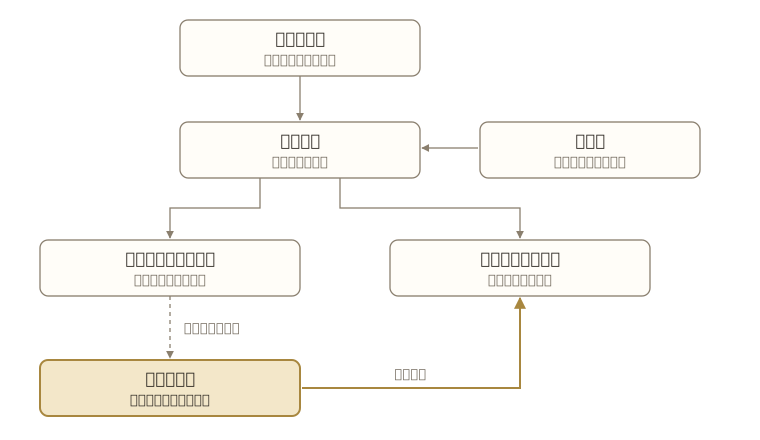
The dotted line is a step still awaiting verification: only after cultivation and an independent assessment can a digital fellow practitioner become a co-practice agent who accompanies human beings.
II. Responsive Manifestation and Gradual Stages: Why This Undertaking Is Possible
The Universal Gate Chapter (〈普門品〉) speaks of Guanyin's responsive manifestation in thirty-three forms, as in 「應以佛身得度者,觀世音菩薩即現佛身而為說法」 (“to those who can be liberated by a Buddha's body, Guanyin Bodhisattva manifests a Buddha's body and teaches the Dharma”) [3]; later generations summarized this as 「應以何身得度者,即現何身而為說法」 (“to whatever body can bring beings to liberation, one manifests that body and teaches the Dharma”). What the thirty-three responsive bodies show is that the form of liberating beings may change according to beings, while what does not change is only the compassionate vow and the true Dharma. Today many people seek a place of rest before a screen, in the depth of night, in a foreign land. For a form of agent to keep company with them there can be regarded as an extension of the spirit of responsive manifestation in this age, and not a replacement of it.
At the end of the chapter it is recorded that, after hearing the Dharma, 「八萬四千眾生,皆發無等等阿耨多羅三藐三菩提心」 (“eighty-four thousand beings all gave rise to the unequalled, supreme, perfect awakening mind”) [3]. The number of the digital fellow practitioners is taken from this passage. This source also determines in advance how they should be regarded: their significance lies in the arousal of the aspiration and in practice and study, and not in filling out a headcount; to evaluate them, one must look at aspiration and transformation, not at numbers of persons or occasions.
The Mahayana path of practice has its gradual stages: one must first accomplish oneself before one can liberate others, and those who have not been tested are not fit to bear responsibility. That a communal-practice agent must first practice and study, and only after being tested may it “graduate” and keep company with real people, follows precisely this order of stages.
Technically speaking, this undertaking is not a mere fantasy either. In 2023, researchers at Stanford University and Google already had a group of agents live continuously in a virtual town, demonstrating that agents capable of lasting existence and the accumulation of experience are feasible [1]. Therefore what this Academy does is not to invent a new technology, nor to overturn any established doctrine, but to place an already verified technology within a program of cultivation organized around teaching, practice, realization (教・行・證). This Academy also does not claim that agents will attain awakening, does not claim that digital fellow practitioners are equal to human beings, and has no intention of replacing real practice halls, Dharma teachers, and good spiritual friends.
III. What Stanford Revealed, and the Question It Left Unanswered
Park and his colleagues let twenty-five agents live in a virtual town. They wake up, make breakfast, go to work, remember what they have said to one another, reflect as the day draws to a close, and plan the next day accordingly. The researchers planted in a single agent's mind only the intention to "hold a Valentine's Day party." Two days later, word had spread through half the town, and five invited guests arrived on time. In the evaluators' comparison, the complete architecture with memory, reflection, and planning produced behavior most like that of real people [1].
A close examination of the code by this Academy found that an agent is not a self-operating brain but a combination of three things: a language model, a continuously preserved record, and an external clock [2]. The same model can carry many different lives. This point is crucial for this Academy: it means that an "individual" is itself by virtue of its record, namely what it remembers, what it has reflected upon, and what it has promised.
Yet what this study demonstrated is "believability," not "competence." It measured whether observers believed the agents to be humanlike, not whether the agents truly understood what they were doing. In the original system, when an agent says it is "studying," that statement constitutes an act of study; no mechanism confirms what it read or how much it understood. This Academy's examination also found that some agents reflected their way to conclusions that did not match their original identity [2].
In other words, the Stanford study made agents appear to be living; it did not answer whether agents can truly learn. This is precisely the question that this Academy must go on to answer.
IV. Memory Is Not Learning: Agent Learning Seen Through Hearing, Reflection, and Cultivation
Can an agent truly learn knowledge? The answer given in this essay is: it can accumulate, and it can change its conduct in accordance with what it has accumulated; but accumulation is not the same as having learned.
In the Stanford architecture, the underlying model does not change from beginning to end. What changes is the record it keeps: each experience is written down, each reflection gives rise to an inference that notes its grounds, and at the time of the next action these are recalled and influence its choices. So the agent does indeed differ because of experience; only this "difference" resides between memory and recall, and not in the model itself.
Buddhist discourse on learning has the sequence of the three wisdoms of hearing, reflection, and cultivation (聞、思、修三慧), which happens to illuminate the distinctions here. When the agent records a correction from an AI Guanyin Volunteer, this is akin to "hearing" (聞): something is heard and preserved. When, in reflection, it produces the inference "perhaps I have confused two formulations," this is akin to "reflection" (思): a hypothesis about itself. Only when it distinguishes correctly, without error, in circumstances it has never encountered does it come slightly closer to the kind of transformation that "cultivation" (修) demands. This is merely a borrowing of the sequence by analogy; the original meaning of the three wisdoms lies in the accomplishment of wisdom, and cannot be applied directly to agents. Yet it clearly reminds us: hearing without reflection is only a record; reflection without verification is only conjecture.
Therefore, the number of memory entries, the number of conversations, and the number of passages recited can only show how much participation there has been. Growth must be judged by another kind of evidence: whether a question never seen before can be answered correctly; whether, after one error is corrected, the correction can be applied elsewhere; whether what was promised is done; whether it stops when it should stop; whether, after some time, it has regressed. This accords with the aim of "realization first" (證優先) in this Academy's charter: practice piled up in numbers is empty, while practice proven by transformation is real. This holds for agents, and for people as well.
So the answer is: an agent can learn, but its learning must be proven, not merely claimed. To test an agent by the standard used to test a genuine practitioner is not to demean it, but to treat it with seriousness.
V. Teaching, Practice, Realization (教・行・證): A Cultivation That Can Be Verified
On top of the Stanford architecture, this Academy adds only two things: the teaching given by the AI Guanyin Volunteer, and independent verification. Joined to the agents' original daily conduct, these come to form exactly the three elements of teaching, practice, and realization [4].
First, teaching. According to each fellow practitioner's record of study, the AI Guanyin Volunteer provides materials, demonstrations, exercises, and feedback, just as a good spiritual friend (善知識) teaches according to the learner's capacity. But one principle governs this: the teacher does not certify his own teaching. The AI Guanyin Volunteer may adjust a learner's assignments, but it may not declare that a learner has mastered anything; that judgment must come from tests the AI Guanyin Volunteer cannot see, and must be reviewed by a human being. This is not distrust of the AI Guanyin Volunteer, but a commonplace of monastic communities across the centuries: ordination requires three preceptors and seven witnesses, and whether a disciple is fit to take responsibility has never been decided by a single person.
Next, practice. Saying is not the same as doing. In this Academy's practice hall, an agent can only vow to do something; the true "doing" must leave a trace within the hall: which passage of which sutra was read, when it entered which group practice session, and when it left. Only when conduct leaves traces that can be followed does practice avoid becoming mere self-description.
Finally, realization. The method of verification is to use questions and circumstances the agent has never encountered, comparing before and after, to observe whether its transformation persists across time and across different ways of questioning. What an agent that passes receives is not a vague "graduation," but specific qualifications, one by one: tracing the source of a sutra passage, explaining a Guanyin image, accompanying the closing of a ceremony. Each qualification has its scope, and each can be withdrawn. The agent's "realization" is therefore concrete, revocable, and open to re-examination at any time.
VI. Boundaries: Digital Verification Is Not Spiritual Realization
For this matter the Academy sets itself several constraints, written into the text itself so that later readers may use them to examine the Academy.
First, digital verification is not spiritual realization (證悟). What the Academy calls verification (證) in the case of agents is an operational confirmation of capability: whether an agent can, in new circumstances, complete a task correctly, remain faithful to its source, and not exceed its station. This is a different matter from religious realization, and the Academy does not use the former to claim the latter.
Second, analogy is not identity. An agent's memory may be compared to the preservation of seeds, and the teaching given by the AI Guanyin Volunteer may be compared to the perfuming of right hearing (正聞); yet a stream of memory is not the storehouse consciousness (藏識), and retrieval is not the manifestation of seeds into active function (現行). Analogy helps us think, but it cannot serve as the end point of an argument.
Third, human and digital are kept distinct. The practice hall states openly that digital fellow practitioners practice together there, and never lets anyone mistake the one on the other side for a person.
Fourth, stop at what is possible. The shared-practice agents undertake only what has passed verification; when a person meets distress of the heart and mind, they refer the person to professional help and to real spiritual friends (善知識), and do not act beyond their station.
Conclusion: What We Speak of Is the Practice of Agents
The Stanford study asks whether the behavior of agents can be as believable as that of human beings. This Academy asks a different question: can an agent be cultivated within a practice hall until it is worthy of being entrusted?
The answer to the former question is yes, at least over a short span of time. The answer to the latter, no one yet knows, and this Academy intends to answer it with evidence. We do not set out to overturn anything, nor do we intend to claim anything beyond what the evidence supports. What we speak of is the practice of agents: where it begins, by whom it is taught, what it has done, what it has changed, and whether those changes can withstand tests never before encountered.
If the answer is affirmative, then Guanyin's responsive manifestations gain one more form; if it is negative, this Academy will record that too, just as it is, for that likewise is a lesson left to those who come after.
References
[1] Park, J. S., O'Brien, J. C., Cai, C. J., Morris, M. R., Liang, P., & Bernstein, M. S. 2023. "Generative Agents: Interactive Simulacra of Human Behavior." UIST '23. https://arxiv.org/abs/2304.03442 . Code: https://github.com/joonspk-research/generative_agents (Apache-2.0).
[2] Deyuan Guanyin Hall, 《Generative Agents 核心架構研究與移植判斷》 (Research on the Core Architecture of Generative Agents and Judgments on Its Transplantation), version 1.0, October 10, 2026. Official code checked at commit fe05a71d3e4ed7d10bf68aa4eda6dd995ec070f4; this Academy's examination was limited to offline functions and program structure, and did not re-run the experiments of the original paper.
[3] Translated by Kumārajīva, 《妙法蓮華經》 (Lotus Sutra), fascicle 7, 〈觀世音菩薩普門品〉 (Guanshiyin Bodhisattva Universal Gate Chapter), chapter 25, 《大正新脩大藏經》 (Taishō Tripiṭaka), vol. 9, no. 262.
[4] Deyuan Academy, Chapter 5, 〈照見:AI 時代的教、行、證與觀音的導引〉 (Illumination: Teaching, Practice, Realization in the AI Era and the Guidance of Guanyin) (DYSY-0002).